Histories › The mines and their history
A zinc ore named for a Dutch king, found first in a country that should not have existed, and made famous by how it glows.
A name for the king
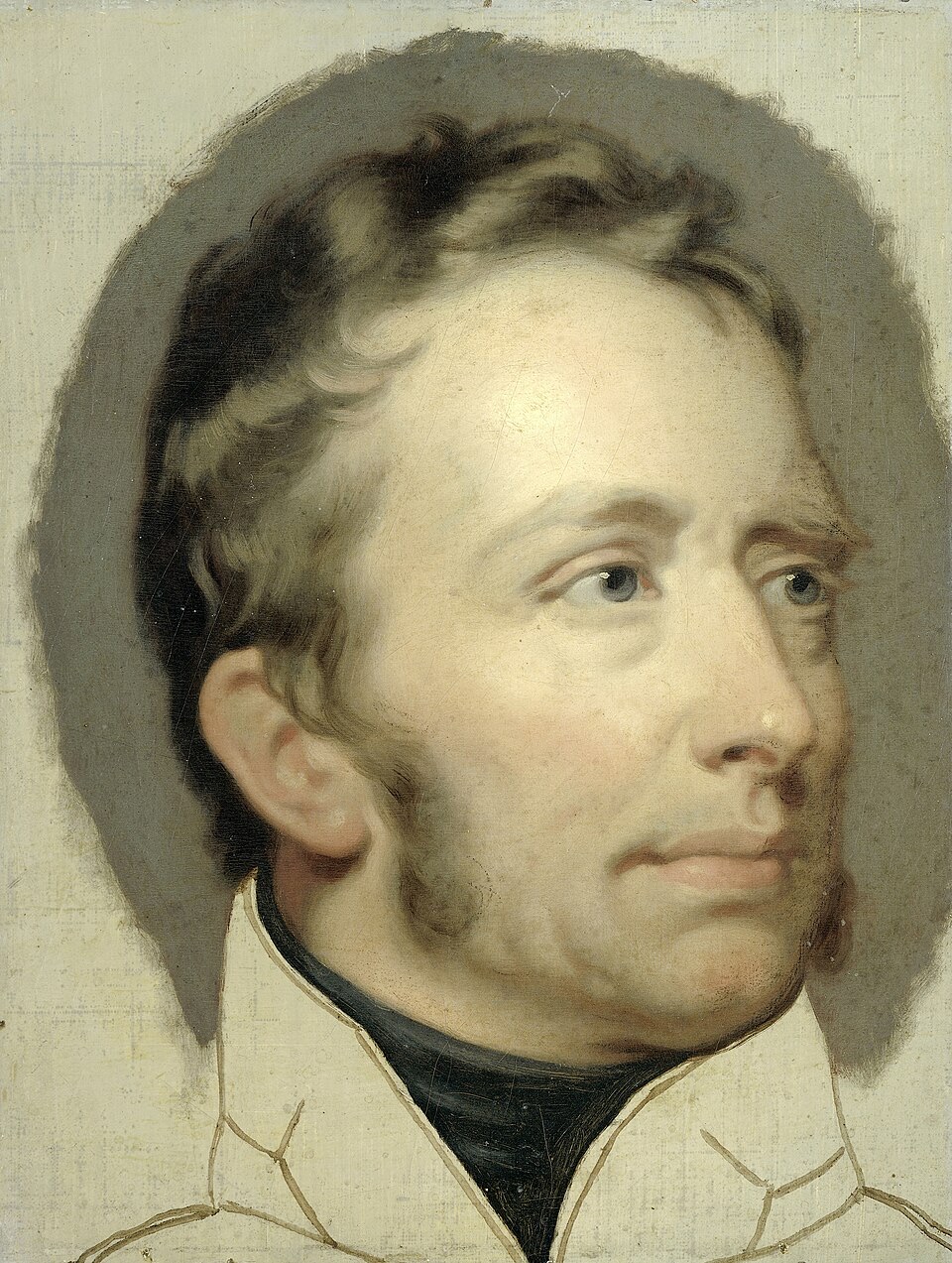
In September 1829 Armand Lévy, a French mineralogist teaching at the University of Liège, wrote to a German journal, the Jahrbuch für Mineralogie, about a new zinc silicate. “It shall be called willemite,” he wrote, “after His Majesty the King of the Netherlands.” Willem I had appointed him to Liège the year before, when Liège was part of the Netherlands. The letter was printed in 1830.
His full description had a harder road. The Académie des Sciences in Paris turned it down, and it was published only in 1843, two years after Lévy died, when his student Des Cloizeaux saw it into print. In it Lévy noted that the mineral held nearly 58 percent zinc, and that roasting did not change it, as the miners already knew.
Not everyone liked a mineral named for a king. In 1916 an Italian mineralogist proposed renaming it “belgite,” and published the proposal in Esperanto. The name willemite stayed.
The country that zinc made
Lévy’s willemite came from the Altenberg, the old zinc mine of the Vieille-Montagne at Kelmis, called La Calamine in French. Calamine had been dug there since the Middle Ages, and in 1816, when Prussia and the Netherlands drew their new border, neither would give up the mine. So they left it out: a small wedge of land, with about 250 people at first, run jointly and belonging to no one. It was called Neutral Moresnet.
It lasted more than a century. After 1830 Belgium took the Dutch side of the arrangement. In 1908 a local doctor tried to turn it into an Esperanto state, to be called Amikejo, “place of friendship.” The mine, worked by the Vieille-Montagne company from 1837 until it closed in 1885, gave about 750,000 tons of zinc, and some of its ore was up to 40 percent willemite. The Treaty of Versailles finally gave the territory to Belgium, which took it over in January 1920.
Troostite, the Franklin cousin
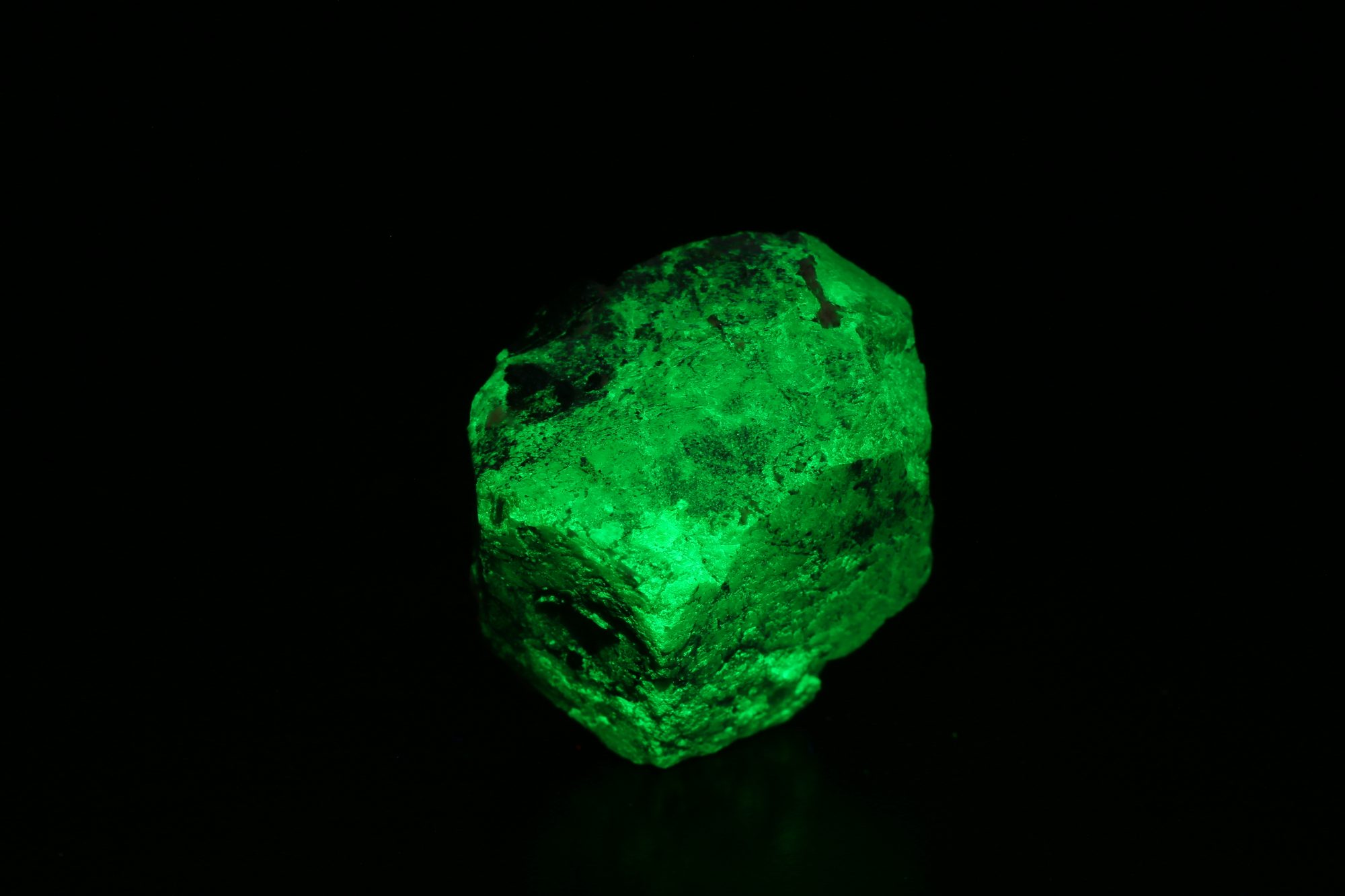
The Franklin mineral was given a name of its own. In 1832 Charles Upham Shepard named it troostite, for Gerard Troost (1776–1850), born in ’s-Hertogenbosch in the Netherlands, first president of the Academy of Natural Sciences of Philadelphia and later state geologist of Tennessee. His story, and the name’s, is told in Gerard Troost and troostite. A wrong analysis had made the crystals out to be a manganese silicate.
In 1849 they were shown to be willemite after all, and the Dutch king’s name won over the Dutch geologist’s. Troostite survives as a variety name for the brown crystals of Sterling Hill, so the Dutch thread runs through New Jersey too.
Ore, and then treasure
At Franklin and Sterling Hill willemite was not a curiosity but ore. After franklinite it was the most common ore mineral in the two mines, and with zincite it was what the New Jersey Zinc Company turned into metallic zinc, once magnets could pull the franklinite away from it (see Pulling franklinite out with magnets). The two mines also gave the world most of its willemite specimens, and the finest.
The glow
Under shortwave ultraviolet light, Franklin willemite glows a fierce green, and some of it goes on glowing after the light is switched off. In 1903 George F. Kunz and Charles Baskerville noted its fluorescence and phosphorescence in Science. In 1912 Theodor Liebisch in Berlin found something telling: Lévy’s brown willemite from the Altenberg did not glow at all, while the troostite from New Jersey glowed intensely.
At Franklin the glow was put to work. By 1928 Charles Palache wrote that using a spark-gap ultraviolet lamp to find willemite in the mill tailings “has long been an important practice at Franklin.” Collectors were already buying it: in 1913 a New York dealer advertised “fluorescent willemite” in the American Journal of Science. Today it is the glow most collectors think of first when they hear Franklin. What potters, lamp makers and television engineers made of willemite is told in Willemite leaves the mine.
In The Picking Table
An early note, “Willemite and its polymorphs” (vol. 4, no. 2, August 1963), takes up the yellow-fluorescing “beta willemite” of Sterling Hill. Richard C. Bostwick’s survey of the local fluorescent minerals gives willemite’s fluorescence and phosphorescence mine by mine (vol. 18, no. 2, September 1977), and Richard V. Gaines and Bostwick’s “The fluorescence of barylite from Franklin, New Jersey” (vol. 34, no. 2, Autumn/Winter 1993) includes a history of the iron-arc lamp and its use on the mill tailings. Stephen Sanford’s “Unaltered Sterling Hill willemite” (vol. 51, no. 2, Fall 2010) is about the alteration that turned most Sterling Hill willemite red; Mark Boyer’s “Flash and BIP” (vol. 52, no. 1, Spring 2011), on the collectors’ words for phosphorescence, goes back to Kunz and Baskerville, and his “Exsolution willemite: the big squeeze” (vol. 53, no. 1, Spring 2012) explains another collectors’ term. Bostwick’s later survey has a long entry on willemite and troostite (vol. 58, no. 1, Spring 2017). Lévy, the naming of the mineral and Neutral Moresnet have not been written about in The Picking Table.
Sources and further reading
- Burke, E. A. J., 2013, ‘Belgian’ mineralogy under ‘Dutch’ rule, 1815–1830. In Minerals of Belgium, MKA 50th anniversary issue, p. 11–13. The best single account of how willemite was named. PDF
- Canfield, F. A., 1907, Mineralogical notes: willemite. American Journal of Science, 4th series, vol. 23, p. 20–23. archive.org
- Delesse, A., and Des Cloizeaux, A., 1846, Sur la willemite. Annales des Mines, 4th series, vol. 10, p. 211–214. On Franklin material. PDF
- Dunn, P. J., Willemite (Franklin-Ogdensburg Mineralogical Society). PDF
- Gordon, S. G., 1923, Crystallographic notes on glaucochroite, willemite, celestite, and calcite from Franklin Furnace. Proceedings of the Academy of Natural Sciences of Philadelphia, vol. 74 (for 1922), p. 105–112. archive.org
- Lévy, A., 1830, letter from Liège, 14 September 1829. Jahrbuch für Mineralogie, Geognosie, Geologie und Petrefaktenkunde, vol. 1, p. 71. HathiTrust
- Lévy, A., 1843, Description de plusieurs espèces minérales appartenant à la famille du zinc. Annales des Mines, 4th series, vol. 4, p. 507–520. PDF
- Liebisch, T., 1912, Über die Fluoreszenz der Sodalith- und Willemitgruppe im ultravioletten Licht. Sitzungsberichte der Preussischen Akademie der Wissenschaften, Berlin, p. 229–240. archive.org
- Neutral Moresnet. Wikipedia
- Palache, C., 1928, The phosphorescence and fluorescence of Franklin minerals. American Mineralogist, vol. 13, p. 330. PDF
- Palache, C., 1935, The minerals of Franklin and Sterling Hill. U.S. Geological Survey Professional Paper 180. PDF
- Palache, C., and Graham, R. P. D., 1913, On the crystallization of willemite. American Journal of Science, 4th series, vol. 36, p. 639–644. archive.org
- Penfield, S. L., 1894, Contributions to the crystallization of willemite. American Journal of Science, 3rd series, vol. 47, p. 305–309. archive.org
- Wurtz, H., 1851, On the troostite of New Jersey. Proceedings of the American Association for the Advancement of Science, vol. 4, p. 146–147. archive.org
Written with Claude, an AI model made by Anthropic, from the sources listed above, and checked against them. October 2026.