Histories › The people behind the minerals
The New Jersey geologist who argued about the age of the Franklin limestone, brought roeblingite to Yale, and wrote novels of the mining camps.
The state geologist’s assistant
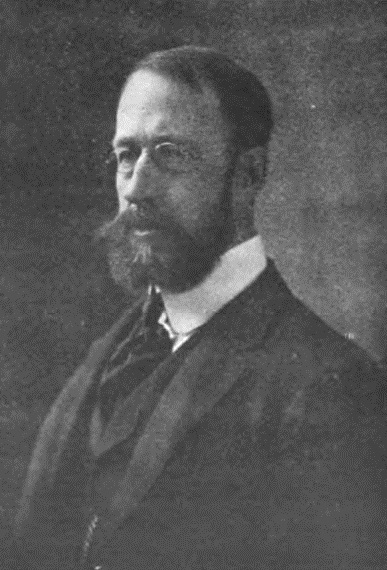
Frank Lewis Nason was born in New London, Wisconsin, in 1856, and graduated from Amherst in 1882. He taught mathematics at Rensselaer and geology at the Troy Female Seminary, and from 1888 to 1891 he was assistant state geologist of New Jersey, then of Missouri.
In New Jersey he walked the iron mines and the white limestone of Sussex County, and he came to a firm opinion: the Franklin limestone, he argued in paper after paper between 1890 and 1894, was young rock, of Cambrian age, not part of the ancient basement. He was wrong. In 1898 J. E. Wolff and A. H. Brooks of the U.S. Geological Survey took up the question at length (their report is in our Library), and today the Franklin Marble is known to be far older, Precambrian. But the argument made people look hard at the rock that holds the Franklin ore.
Minerals for Yale
At Franklin he was also called in to save a flooded shaft. In 1891 the Sterling Iron and Zinc Company was sinking the Parker shaft at Franklin when, at 580 feet by Shuster’s account (560 by Baum’s, in The Picking Table), the miners drilled into an open seam: “a rush of water compelled them to abandon the shaft as quickly as possible to save their lives. Within thirty hours this shaft was filled with water to within forty feet from the surface of the ground.” Nason studied the geology of the country around and estimated how much water would have to be pumped to lower it to the seam, and “after fourteen months constant pumping the water was lowered to the water seam and held at this elevation” (Elwood Shuster, Historical Notes, 1927, p. 43). The rest of the story is in Before the company.
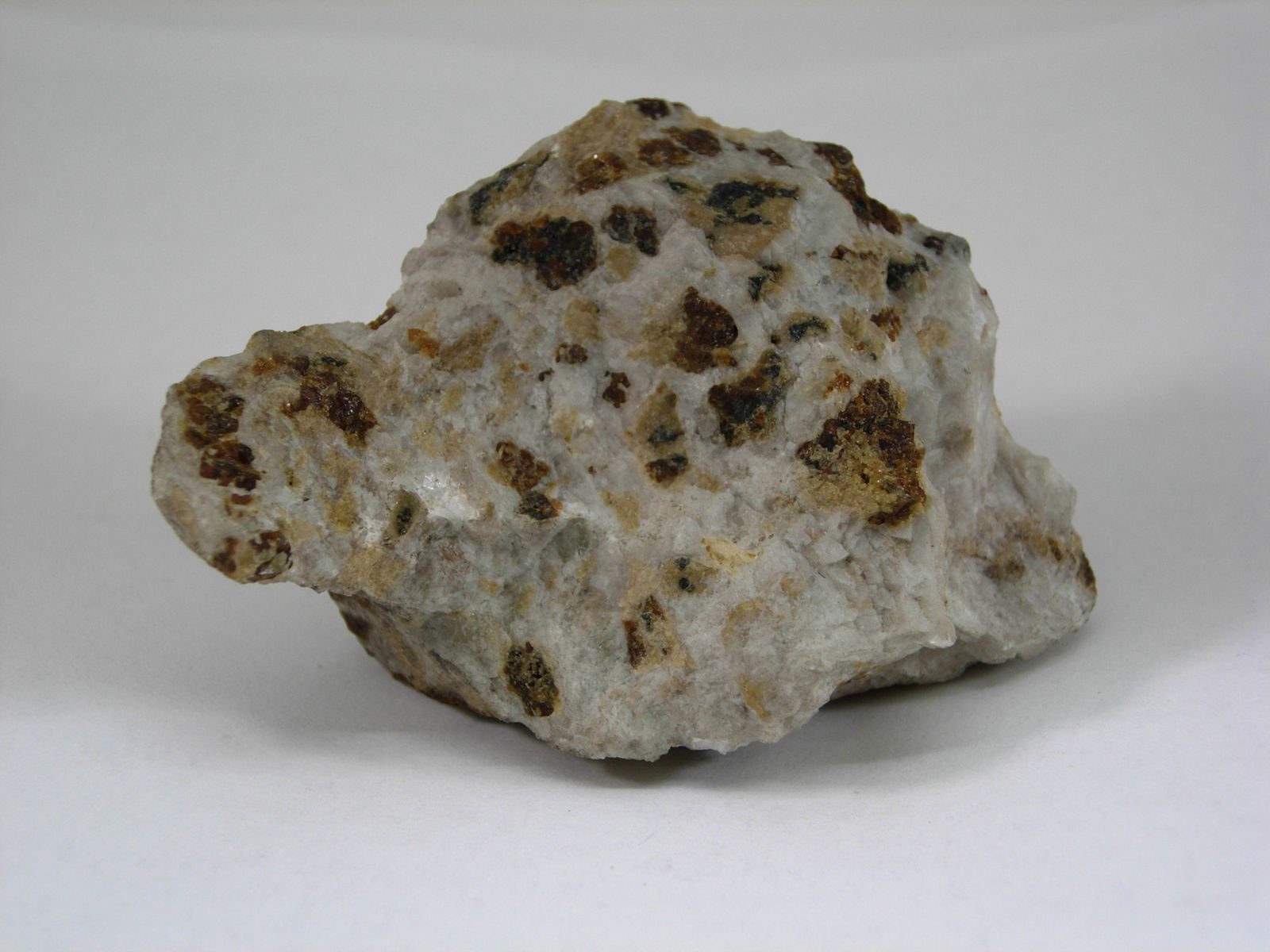
Nason went on to consult for the New Jersey Zinc Company, and he sent what he found to Samuel Penfield at Yale. In 1897 he brought in a heavy white mineral from the Parker shaft that Penfield and Foote named, at his request, for Washington Roebling (see Wire rope and roeblingite). In 1899 Penfield and C. H. Warren described a group of new minerals from the Franklin zinc mines, and one of them, a lead and calcium silicate, they named nasonite, for him.
The novelist
Nason had another life. In the first years of the new century he published three novels: To the End of the Trail (1902), The Blue Goose (1903) and The Vision of Elijah Berl (1905). The Blue Goose is a story of a western gold-mining camp, of stolen gold, mills and underground furnaces, written by a man who knew mines from the inside.
He died in 1928 at Glens Falls, New York, after an automobile accident. His mineral outlasted his limestone theory, and his novels are still there for anyone who wants to read a mining geologist’s fiction.
In The Picking Table
Nason turns up in the Society’s journal through his letters and reports. Extracts from Washington Roebling’s correspondence begin with Penfield’s letter of May 3, 1897, on naming roeblingite at Nason’s “very earnest request” (vol. 11, no. 1, February 1970). The editor printed Nason’s letter of March 2, 1926, to R. M. Catlin, superintendent of the Franklin mine, on scientific study of the ore (vol. 17, no. 1, March 1976). John L. Baum’s “The Sussex Calcite Company” (vol. 21, no. 1, March 1980) tells how promoters founded a 1906 venture on Nason’s glowing report, which the State Geologist said had been abridged so as to mislead; Baum’s “Big Jim Stephens and the Franklin iron mines” (vol. 21, no. 2, September 1980) uses Nason’s observations of 1927 on the old iron mines; and his “Sphalerite at Franklin, N.J.” (vol. 27, no. 1, Spring 1986) starts from Nason’s letter of 1911 to the Zinc Company’s manager of mines. Pete J. Dunn’s “Research in mineralogy (1889–1890)” (vol. 30, no. 2, Fall 1989) places his first papers, and Herb Yeates’s “The lead silicate minerals of Franklin, New Jersey: an SEM survey” (vol. 33, no. 1, Spring 1992) pictures nasonite crystals. No article on Nason’s life, or on his novels, has appeared in The Picking Table.
Sources and further reading
- Frank Lewis Nason. Wikipedia
- Nason, F. L., 1890, The post-Archean age of the white limestones of Sussex County, N.J. Geological Survey of New Jersey, Annual Report for 1890, p. 25–50.
- Nason, F. L., 1902, To the End of the Trail. archive.org
- Nason, F. L., 1903, The Blue Goose. Project Gutenberg
- Nason, F. L., 1905, The Vision of Elijah Berl. archive.org
- Penfield, S. L., and Warren, C. H., 1899, Some new minerals from the zinc mines at Franklin, New Jersey. American Journal of Science, 4th series, vol. 8, p. 339–353.
- Wolff, J. E., and Brooks, A. H., 1898, The age of the Franklin white limestone of Sussex County, New Jersey. U.S. Geological Survey, 18th Annual Report, part 2. PDF
As far as we can find, this life has not been written up in The Picking Table. Written with Claude, an AI model made by Anthropic, from the sources listed above, and checked against them. October 2026.