Histories › The mines and their history
How a Trenton wire-rope family, the Brooklyn Bridge and a rare Franklin mineral are tied together.
Rope for the mines
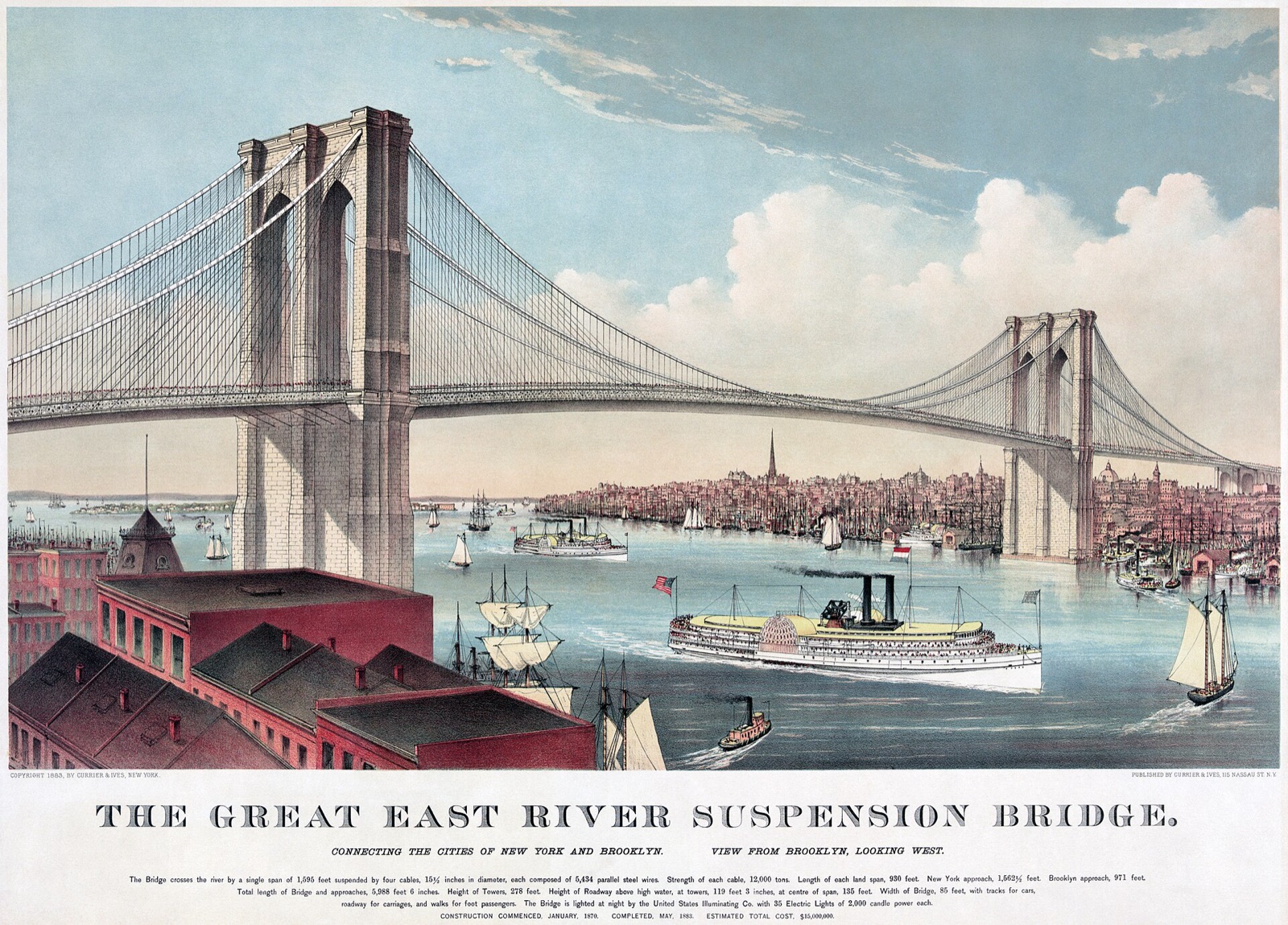
Wire rope began underground. In the early 1830s Wilhelm Albert, a mining official at Clausthal in the Harz mountains of Germany, twisted iron wires into strands and the strands into rope, to hoist ore up the shafts. His rope went to work in the Caroline mine in 1834 and outlasted the hemp it replaced, and it spread through the mines of Europe.
John A. Roebling did not invent it, but he made it American. A German-born engineer, he began making wire rope at Saxonburg, Pennsylvania, in 1841, for the inclined planes of the Allegheny Portage Railroad and then for suspension bridges. He moved the works to Trenton, New Jersey, in 1848–49. As John A. Roebling’s Sons Co., the firm became the world’s leading maker of wire rope, and in 1904 it built the Kinkora Works and the company town of Roebling, New Jersey, on the Delaware. The Roebling Museum now occupies the former gateway to the mill, through which thousands of workers passed each day. Its six galleries, guided tours of the company town and a millyard of industrial machinery tell the story of the town and of the people who made the wire.
The bridge builder who collected minerals
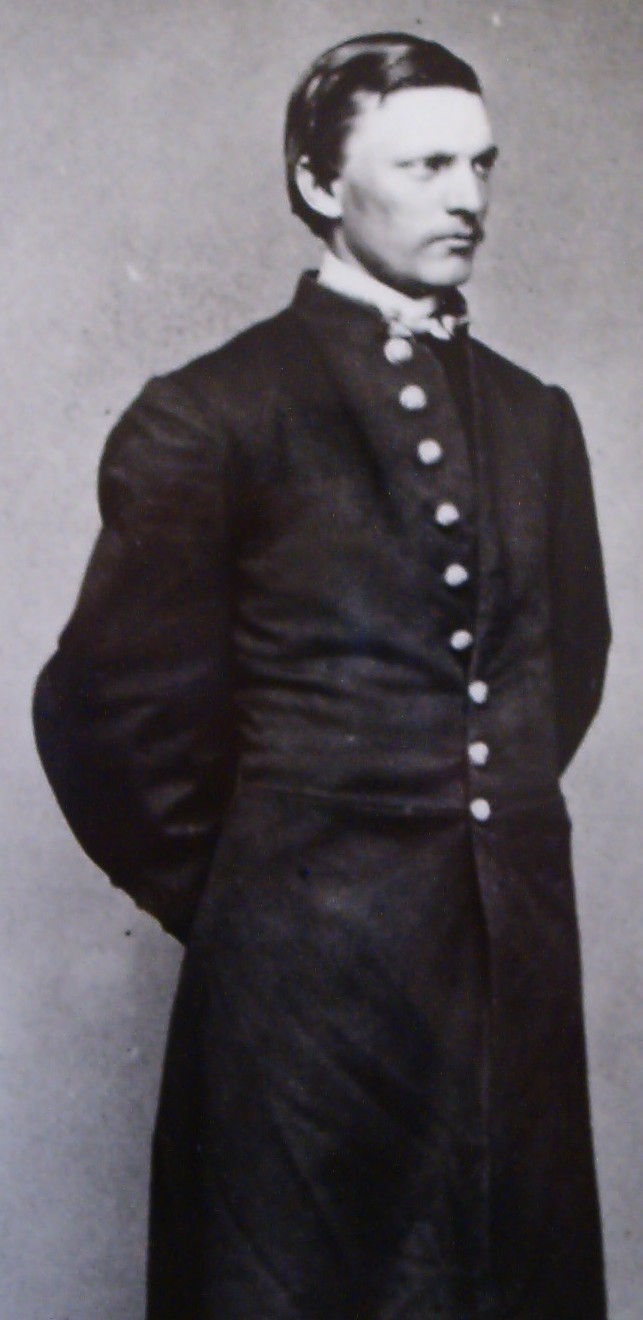
His son Washington A. Roebling (1837–1926) finished the Brooklyn Bridge after his father’s death, directing the work from a window after the bends left him disabled in 1872. The bridge opened in 1883.
He had taken up minerals as a student at Rensselaer, and in the long years of his illness they became a passion. He built one of the great American collections, about 16,000 specimens, and he brought hard problems to Charles Palache at Harvard, the leading authority on Franklin, who remembered him arriving with “tough nuts to crack”: usually some minute crystal from Franklin or Paterson.
In 1926 his son John A. Roebling II gave the collection to the Smithsonian, in 350 boxes, with an endowment of $150,000 that has bought more than 13,000 specimens since. Shortly before he died, Washington Roebling gave the Mineralogical Society of America the money for what became the Roebling Medal, its highest honor. The first went to Palache, in 1937.
Roeblingite
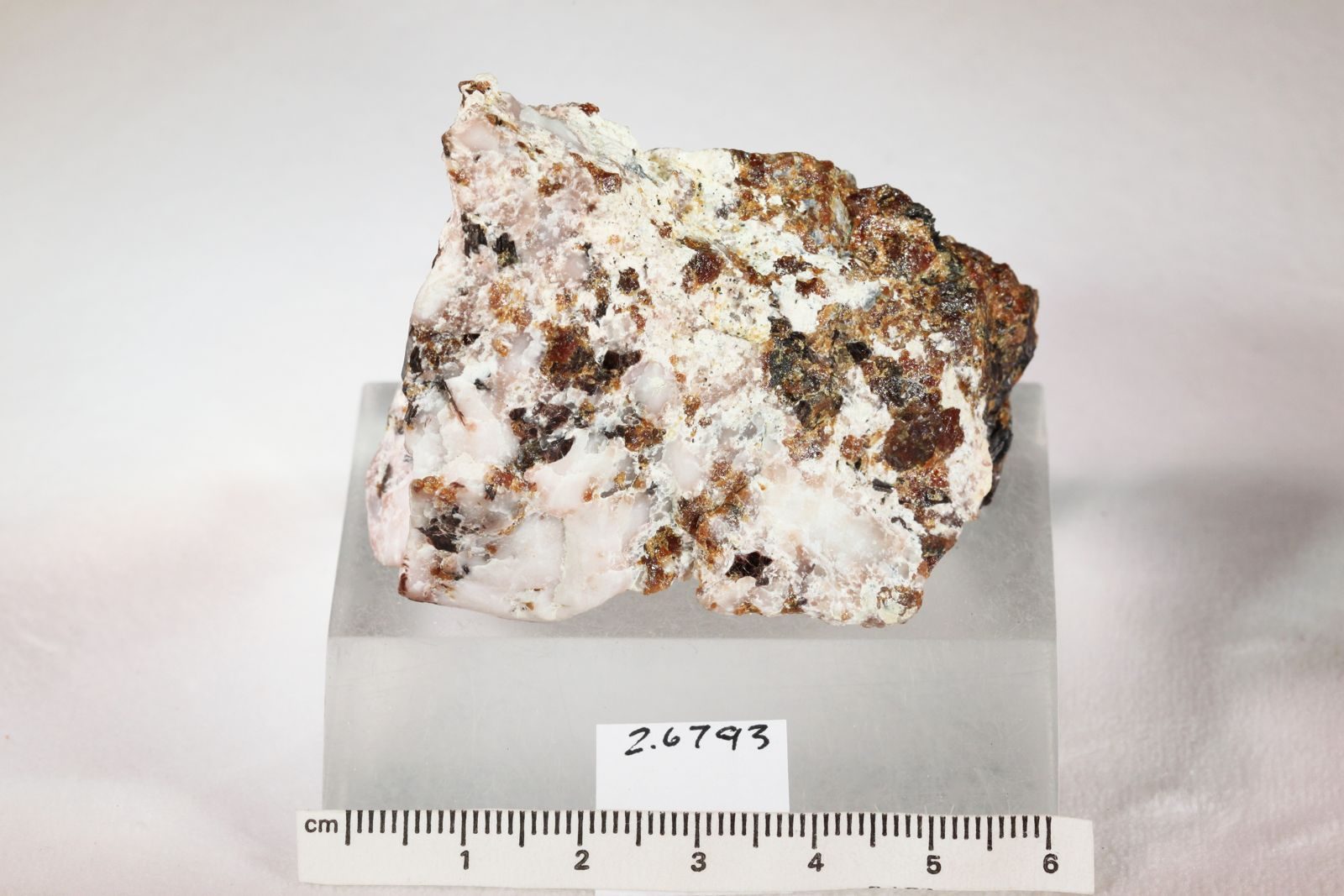
In 1897 Samuel L. Penfield and H. W. Foote of Yale described a new mineral from Franklin Furnace, brought to them by the mining engineer Frank L. Nason. It came from the Parker shaft of the New Jersey Zinc Company, at the 1,000-foot level, in garnet rock where the granite meets the limestone. The largest piece was about five pounds, “the size and shape of a cocoanut.” At Nason’s request they named it roeblingite, “in honor of the celebrated engineer, Mr. W. A. Roebling of Trenton.”
Roeblingite is a white to pale pink silicate of lead, calcium and manganese with sulfate, Pb2Ca6Mn(Si3O9)2(SO4)2(OH)2·4H2O. Penfield and Foote thought the sulfur was there as sulfur dioxide; in 1931 it was shown to be sulfate, and its structure was worked out only in 1984. It is soft and dense, and it glows red to orange-red under shortwave ultraviolet light. Besides Franklin, it is known from Långban in Sweden.
So the rope that came out of the mines of the Harz, the family that made it in New Jersey, the bridge it held up and a rare mineral from a New Jersey mine all lead back to the same name.
In The Picking Table
The Society’s journal has followed roeblingite closely and Washington Roebling now and then. John S. Albanese’s “The Parker shaft lead silicate minerals” (vol. 6, no. 2, August 1965) tells where the Parker shaft suite came from and what the miners found in the old Palmer shaft pillars in the mine’s last years. In 1967 the journal abstracted F. F. Foit’s “New data on roeblingite” (vol. 8, no. 1), and in 1970 it printed extracts from Roebling’s correspondence at the Smithsonian, beginning with Penfield’s letter of May 3, 1897 (vol. 11, no. 1). Pete J. Dunn’s study of the lead silicates from Franklin, with the roeblingite assemblage, is abstracted in vol. 28, no. 1 (1987); R. S. W. Braithwaite’s revised formula follows in vol. 28, no. 2 (1987), and a letter from Paul B. Moore on its crystal structure, which makes roeblingite a “fattened” margarosanite, in vol. 29, no. 1 (1988). Peter Chin and Gary Grenier Jr. began a series on the Parker shaft minerals with “Roeblingite and the ‘Parker Shaft Minerals’” (vol. 39, no. 2, Fall/Winter 1998). George Elling’s “Letters from the past” (vols. 48–49, 2007–2008) reproduces Roebling’s letter of May 1925 to Palache, with a short sketch of his life; Earl R. Verbeek and Paul F. Carr’s “Roeblingite — a cautionary tale” (vol. 52, no. 1, Spring 2011) is about a look-alike; and Richard C. Bostwick describes its fluorescence (vol. 58, no. 1, Spring 2017). No article on the Roebling wire-rope works, or on Roebling’s collection as a whole, has appeared in The Picking Table.
Sources and further reading
- Anthony, J. W., and others, Handbook of Mineralogy: roeblingite. PDF
- Mineralogical Society of America: Washington A. Roebling. MSA
- Penfield, S. L., and Foote, H. W., 1897, On roeblingite, a new silicate from Franklin Furnace, N.J., containing sulphur dioxide and lead. American Journal of Science, 4th series, vol. 3, p. 413–415. Full text (archive.org)
- Roebling Museum, 100 Second Avenue, Roebling, New Jersey: the company town, its workers and the Roebling works. Roebling Museum
- Smithsonian Institution Archives: Washington A. Roebling papers (Record Unit 7152). Finding aid (PDF)
- Wire rope, and Wilhelm Albert. Wikipedia
Written with Claude, an AI model made by Anthropic, from the sources listed above, and checked against them. October 2026.