Histories › The people behind the minerals
A single Franklin specimen sat mislabeled in a Cleveland collector’s cabinet for fifteen years before it was sacrificed to prove a new mineral.
A mining man’s cabinet
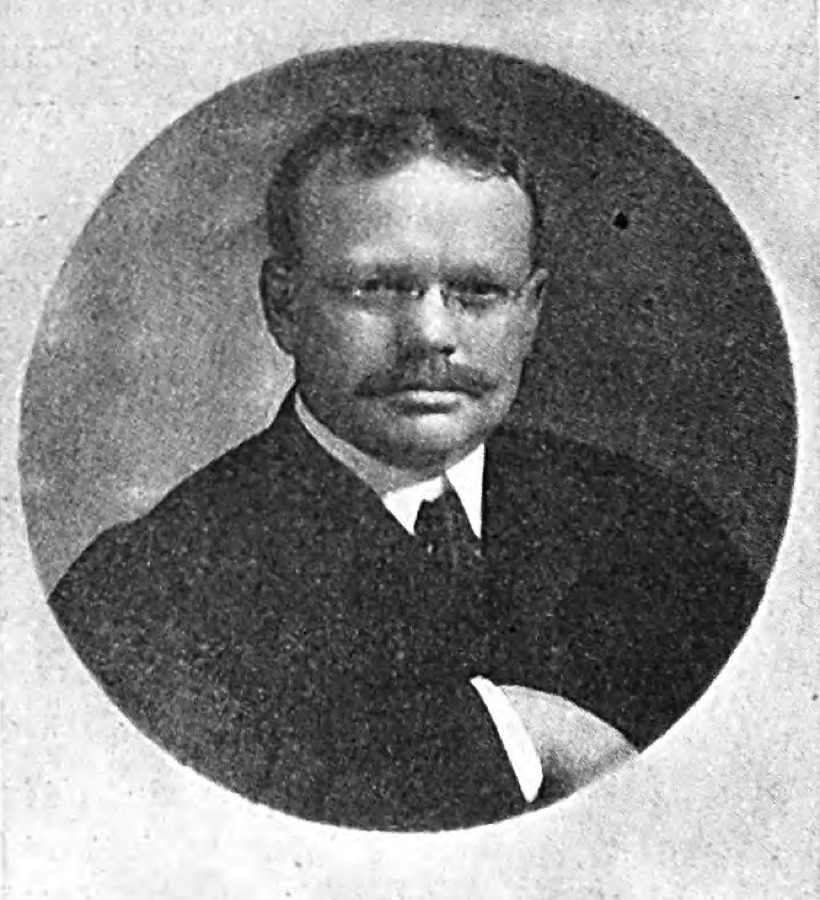
Albert Fairchild Holden graduated from Harvard in 1888 as a mining engineer and joined his father, Liberty Holden of Cleveland, in the silver fields of Utah. When he began collecting is told three ways. J. E. Wolff, his friend and Harvard’s curator, wrote in 1914 that “he began to collect minerals in 1895 and continued with ever-increasing activity until his last illness, or for eighteen years” (as quoted in The Picking Table). Q. David Bowers, writing the history of the Holden family’s coin collection, has him picking up specimens from his own and neighboring mines about 1892, soon after he reached Utah, and collecting seriously from 1896. Each date may mark a different step. He went on to build one of the largest mining and smelting businesses of his day.
He kept his minerals in mahogany cabinets at his home in Cleveland, and he planned with the Harvard mineralogist J. E. Wolff to leave them to the university, with an endowment. He died in 1913, at forty-seven, and his collection went to Harvard at once, where it became the core of the university’s mineral collection.
Holdenite
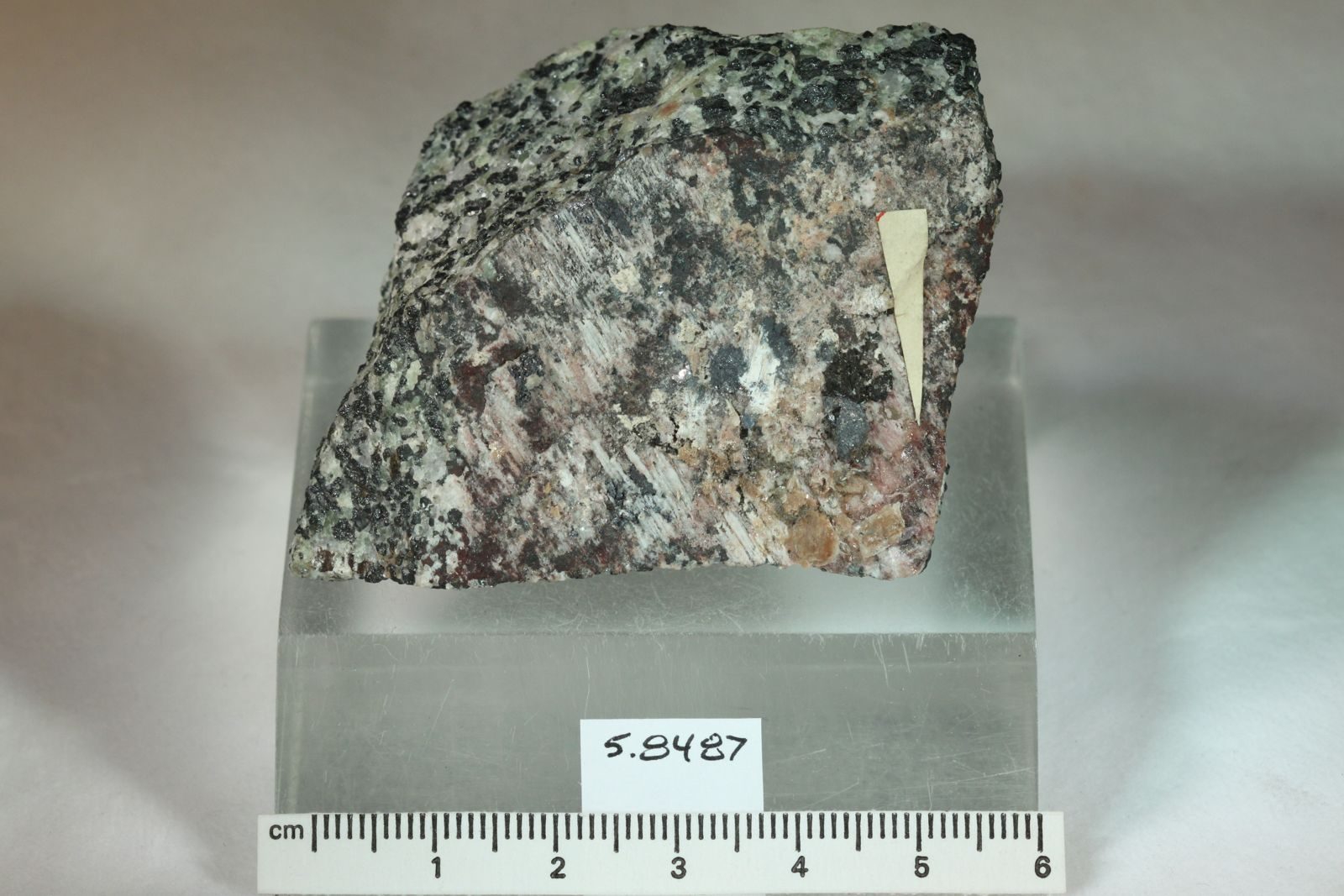
Among Holden’s specimens was one from Franklin labeled leucophoenicite. Charles Palache, looking through the collection about 1912, measured its pink to deep red crystals and was nearly sure it was something new, an arsenate of manganese. But to prove it, the crystals would have to be taken off the only specimen and dissolved for analysis. For fifteen years he searched for more, and found none.
At last the decision was made to sacrifice the specimen; all but two or three crystals were removed. E. V. Shannon of the Smithsonian analyzed them, and in 1927 Palache and Shannon published holdenite, named for the collector whose cabinet had held it.
Twenty years later Joan Prewitt-Hopkins of Radcliffe studied holdenite by X-ray in the same paper in which she separated torreyite from mooreite (see Gideon Moore), so three Franklin names, Holden, Moore and Torrey, meet in one short article.
In The Picking Table
F. W. Miller’s “Harvard’s Franklin collection” (vol. 28, no. 1, Spring 1987) quotes a long passage from J. E. Wolff’s 1914 memorial of Holden in the Mineralogical Magazine, on his collecting, his wish to add his minerals to Harvard’s, and the Losey collection that came to Harvard with his. On the mineral, the journal abstracted P. B. Moore and T. Araki’s “Holdenite, a novel cubic close-packed structure” (vol. 18, no. 2, September 1977), worked out on a crystal from the holotype at Harvard, “the only verified specimen”; quoted at length from Pete J. Dunn’s “Holdenite from Sterling Hill and new chemical data” (vol. 23, no. 1, Spring 1982), on the Franklin type specimens and the find of 1977 at Sterling Hill, after which holdenite was no longer known only from Franklin; and printed the second part of Moore’s “Closest-packed mineral structures of Franklin-Ogdensburg” (vol. 37, no. 1, Spring/Summer 1996), which takes holdenite among its examples. No account of Holden’s life written for the journal has appeared.
Sources and further reading
- Bowers, Q. D., The Norweb Collection: An American Legacy, chapter 2 (on the Holden family). PCGS
- National Mining Hall of Fame: Albert Fairchild Holden (inducted 1990; archived copy, August 2025). Mining Hall of Fame
- Palache, C., and Shannon, E. V., 1927, Holdenite, a new arsenate of manganese and zinc, from Franklin, New Jersey. American Mineralogist, vol. 12, p. 144–148. PDF
- Prewitt-Hopkins, J., 1949, X-ray study of holdenite, mooreite, and torreyite. American Mineralogist, vol. 34, p. 589–595. PDF
As far as we can find, this life has not been written up in The Picking Table. Written with Claude, an AI model made by Anthropic, from the sources listed above, and checked against them. October 2026.