Histories › The mines and their history
Photographs and drawings from the company engineers’ own account of how the Franklin mine was worked, published in 1918.
Above ground
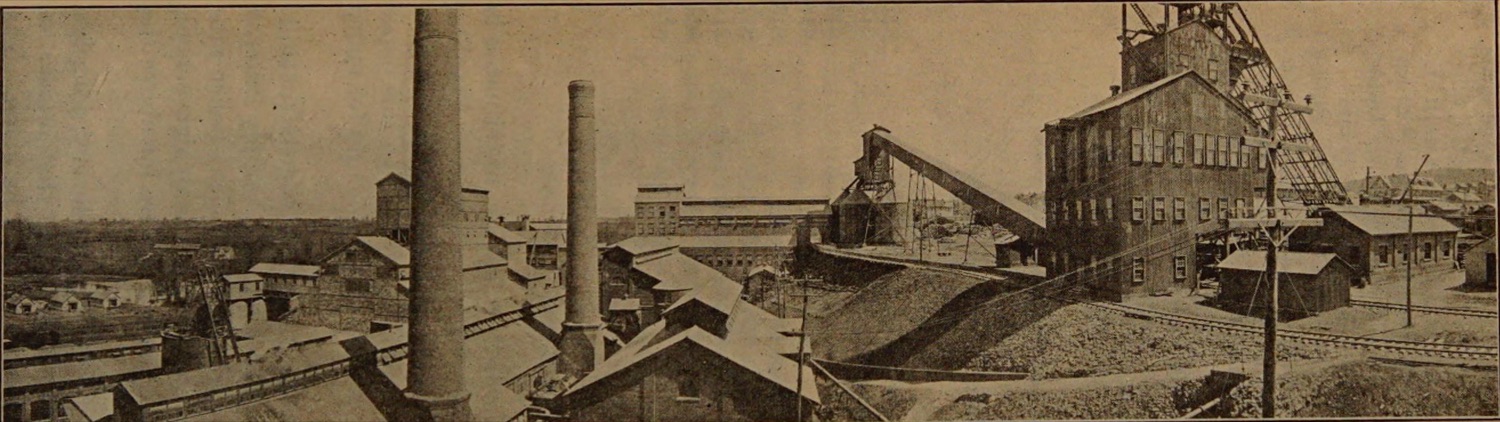
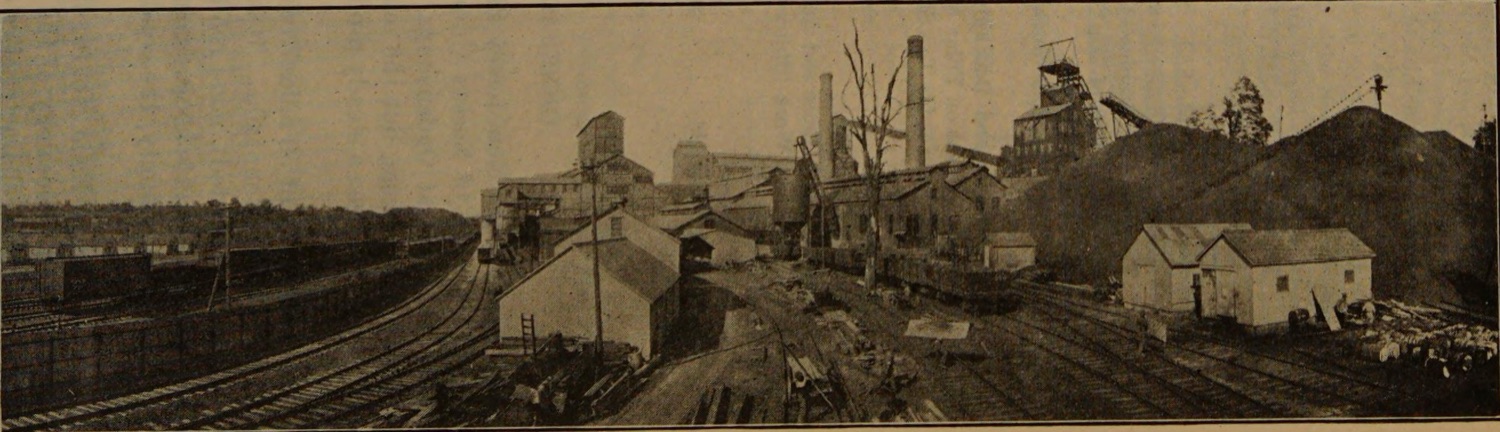
In 1918 two New Jersey Zinc Company engineers, C. M. Haight and B. F. Tillson, published a long account of the Franklin mine in the Transactions of the American Institute of Mining Engineers: how it was laid out, how the ore was broken, hoisted and timbered, and how the men were kept safe.
The shaft and its buildings
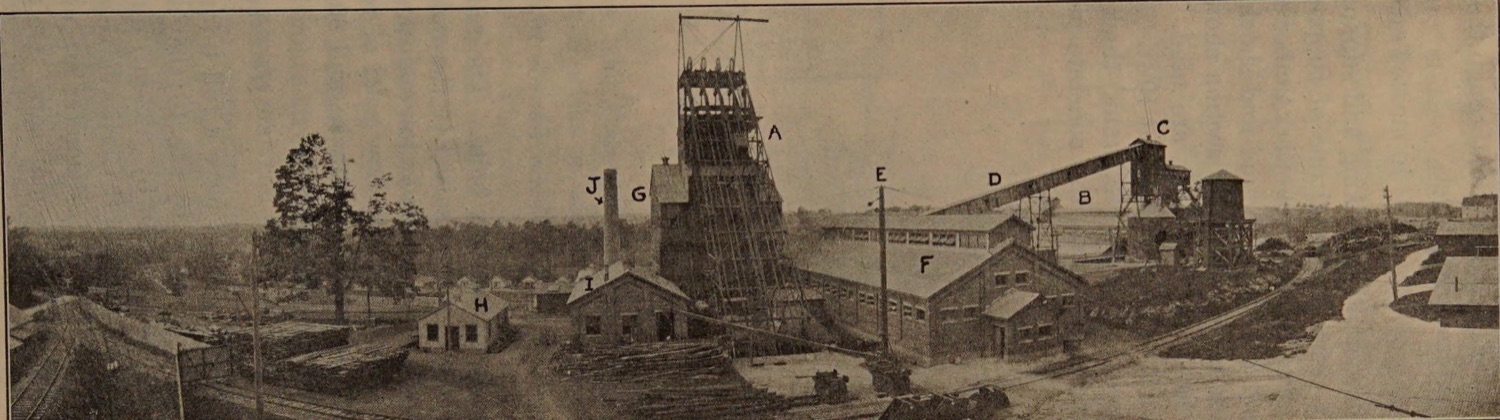
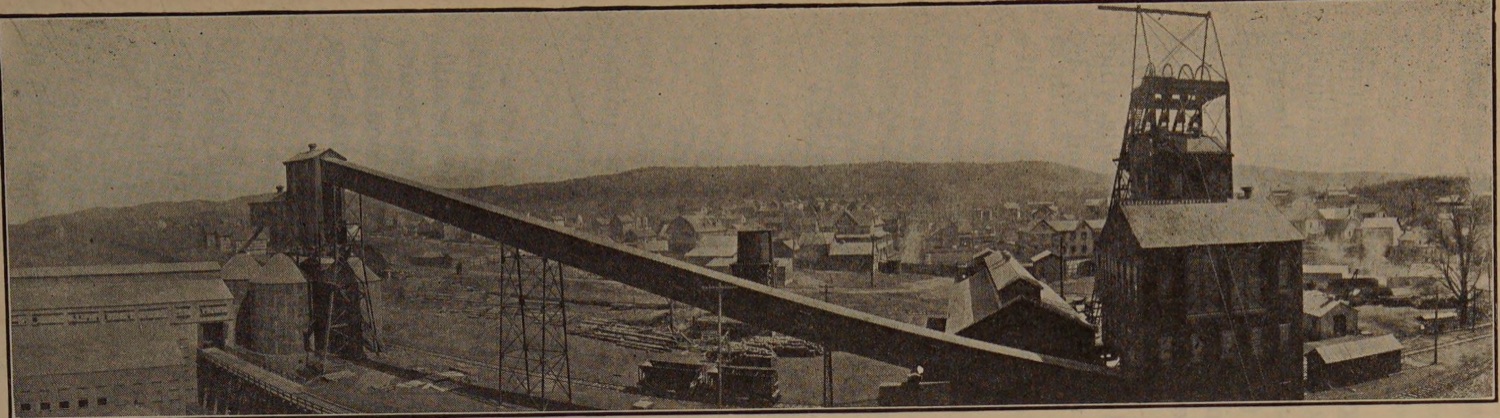
The engineers lettered every building around the shaft: the head frame over the shaft, the conveyor that carried ore to the mills, the coarse crusher, the change house where the miners changed their clothes, the laundry, the blacksmith shop and the power house below the hill.
Shafts and headframes
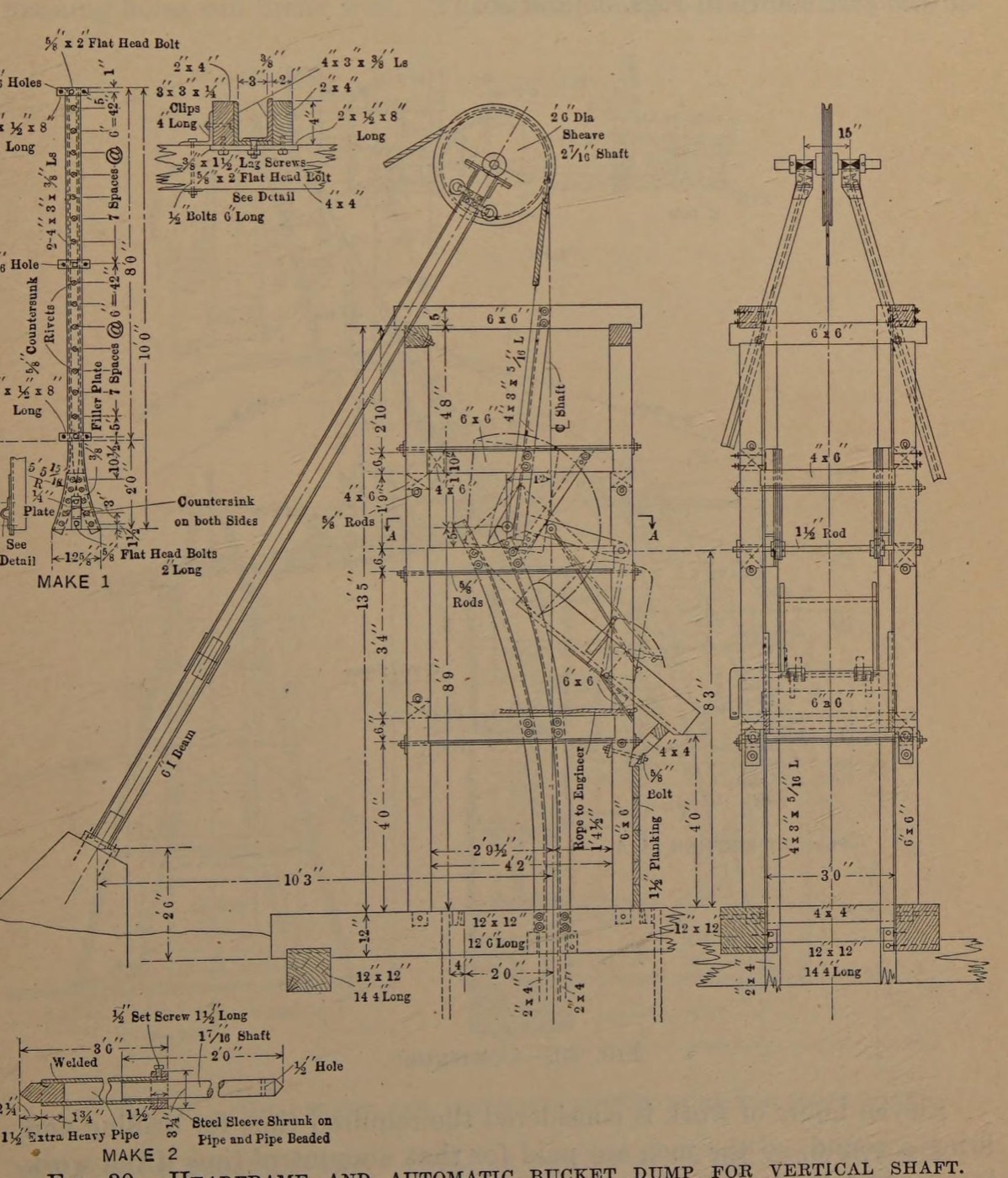
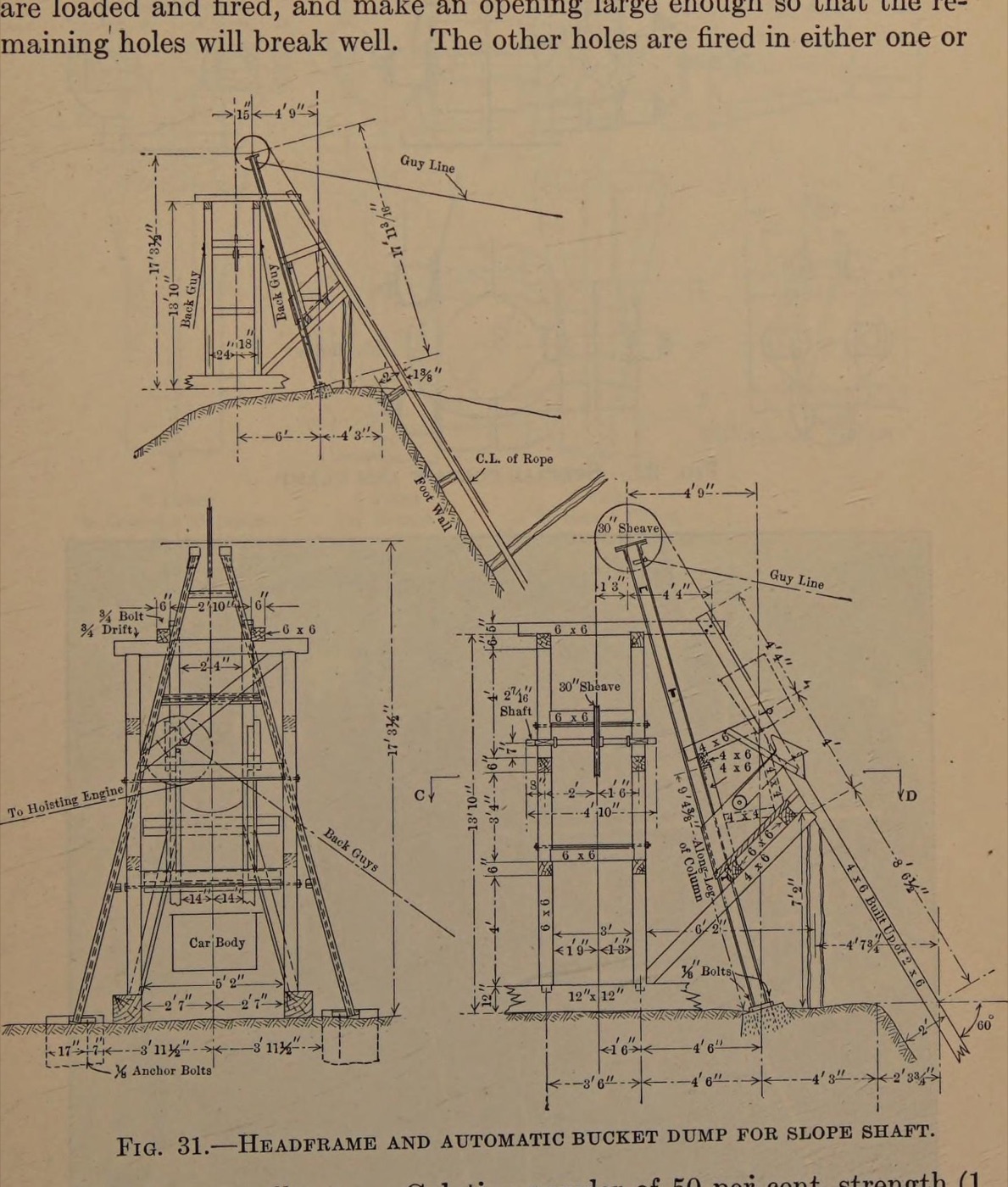
The drawings in the paper are as fine as the photographs. Every headframe, chute and timber set at Franklin was drawn to scale, so that another mine could build one from the page. Shafts were worked with headframes like these, where a bucket rising from below tipped itself out automatically at the top.
The Palmer shaft
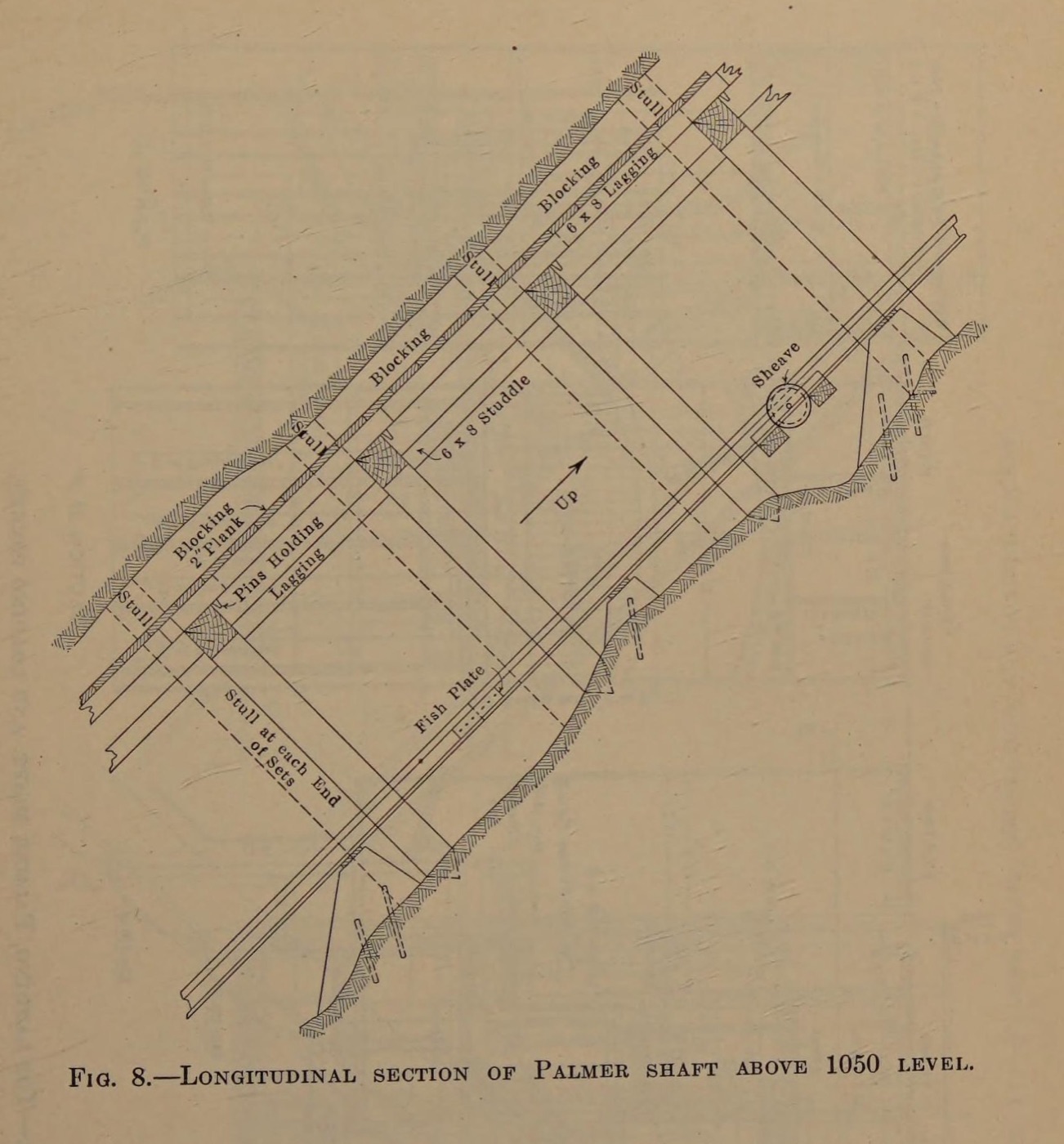
The Palmer shaft, the main shaft of the mine, went down on the incline of the ore body. Its timbers were long-leaf yellow pine, a foot square, with lagging and blocking packed behind them against the rock.
Underground
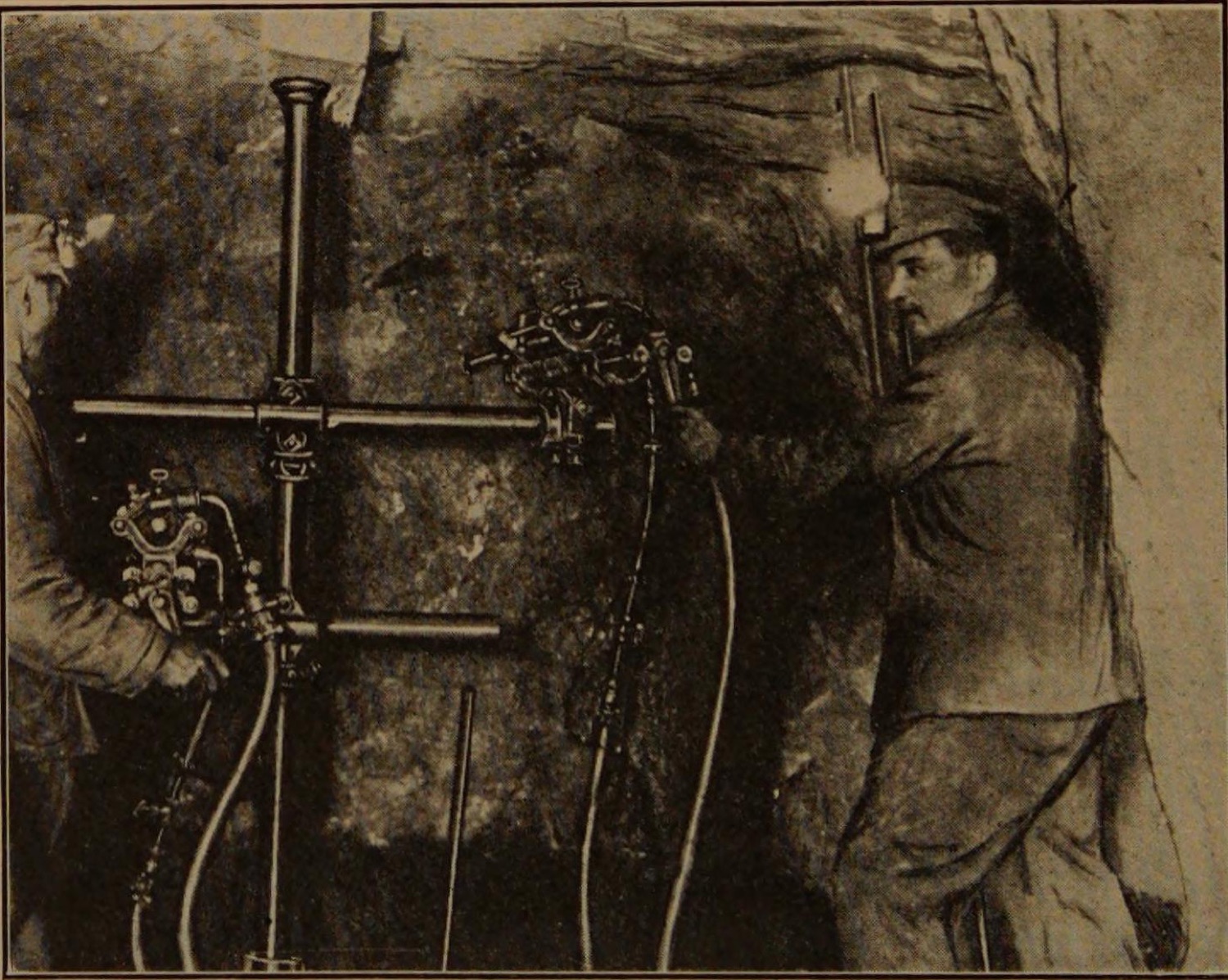
Underground the ore was broken by drilling and blasting. The drill was clamped to a steel column wedged across the drift, and while the drill runners drilled the holes in the upper part of the face, the muckers cleared away the broken rock. The stopes were held up with timber sets (see Wawayanda and the timber for the mines).
The South open cut
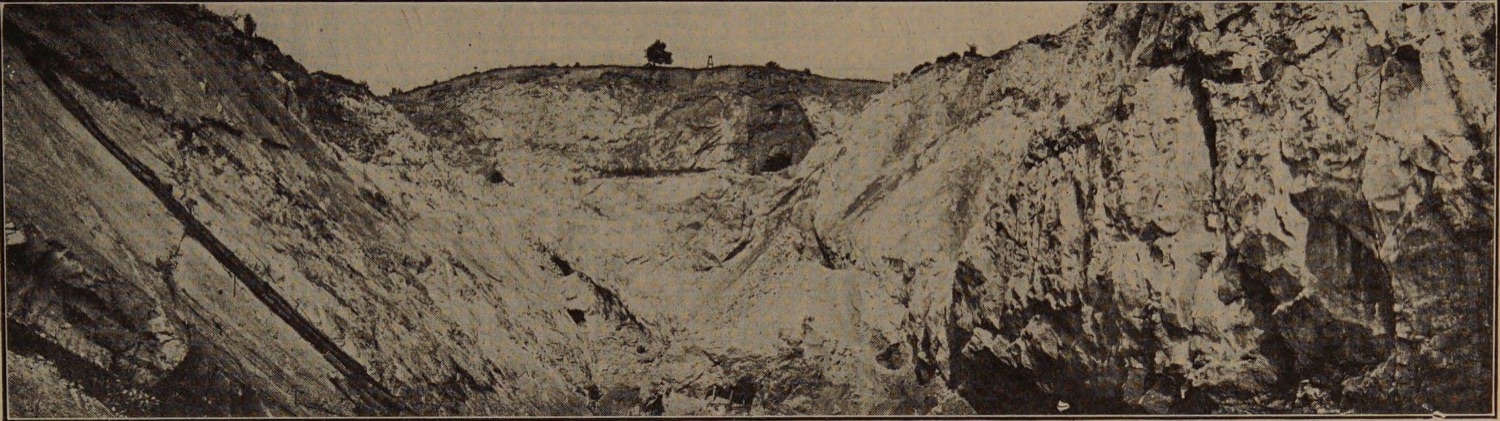
Not all the ore came from underground. Parts of the ore body near the surface were worked from open cuts, deep trenches in the hillside, like the South open cut shown here.
Safety and first aid
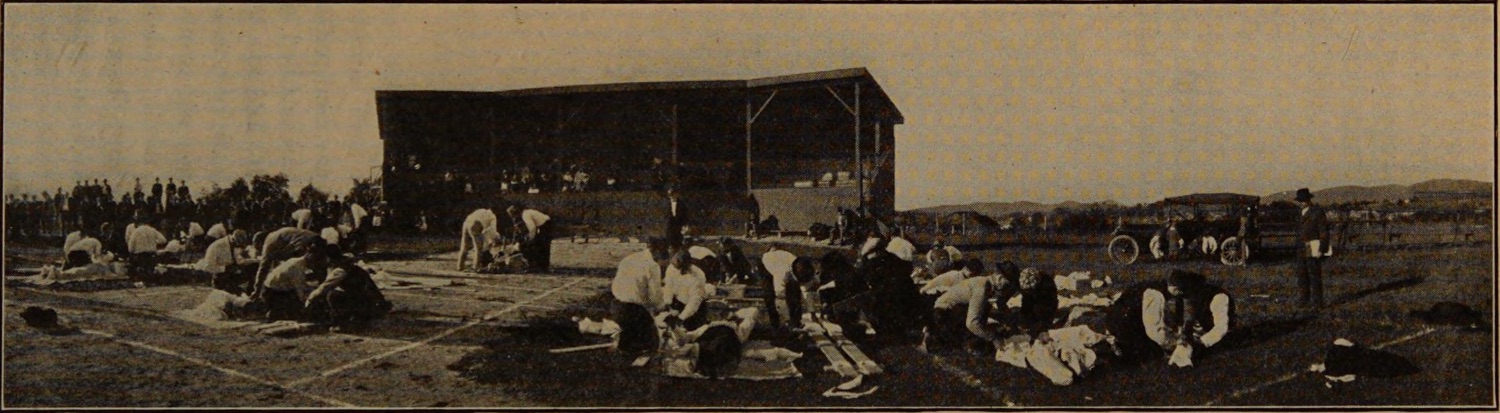
The company took safety seriously enough to make a contest of it. Teams of miners competed at first aid on an open field before a grandstand, bandaging and carrying “injured” men. Tillson also wrote on safety at Franklin in the company magazine, Zinc, in 1917.
In The Picking Table
Clarence M. Haight, one of the two authors, gave the Society “Mining at Franklin and Sterling Hill – synopsis” (vol. 1, no. 2, June 1960), a plain account of levels, drifts and stopes by the man who had been superintendent. John L. Baum’s “The Franklin open cut” (vol. 17, no. 1, March 1976) sorts out the surface workings, and his “Robert Mayo Catlin: a vignette” (vol. 28, no. 2, Fall 1987) is about the manager of mines who reorganized the mine after 1906, with the change house, the hospital and the safety rules. In vol. 30, no. 1 (1989) Steven C. Misiur traced the Palmer shaft headframe and engine house from this paper, with a note on its source. William D. Lord Jr.’s “A study of top-slicing at the Franklin mine” (vol. 32, no. 2, Fall 1991), a company study of 1946, describes the timbering of the pillars in the mine’s later years, and H. N. Coriell’s “Franklin mine fire conquered after stubborn fight,” reprinted from Zinc of May 1925 (vol. 33, no. 1, Spring 1992), shows Tillson’s rescue crews at work. The paper of 1918 itself has not been reprinted or summarized in The Picking Table.
Sources and further reading
- Haight, C. M., and Tillson, B. F., 1918, Zinc mining at Franklin, N.J. Transactions of the American Institute of Mining Engineers, vol. 57, p. 720–829. All the pictures on this page are from it. Full text (archive.org)
- Tillson, B. F., 1917, Safety measures and recording accidents at Franklin. Zinc (magazine of the New Jersey Zinc Company), vol. 2, p. 91–98.
Written with Claude, an AI model made by Anthropic, from the sources listed above, and checked against them. October 2026.