Histories › The people behind the minerals
A tiny brown Franklin mineral named for one of the great mining engineers of his age, who ran gold mines in Africa and copper mines in Chile.
A mining engineer’s life
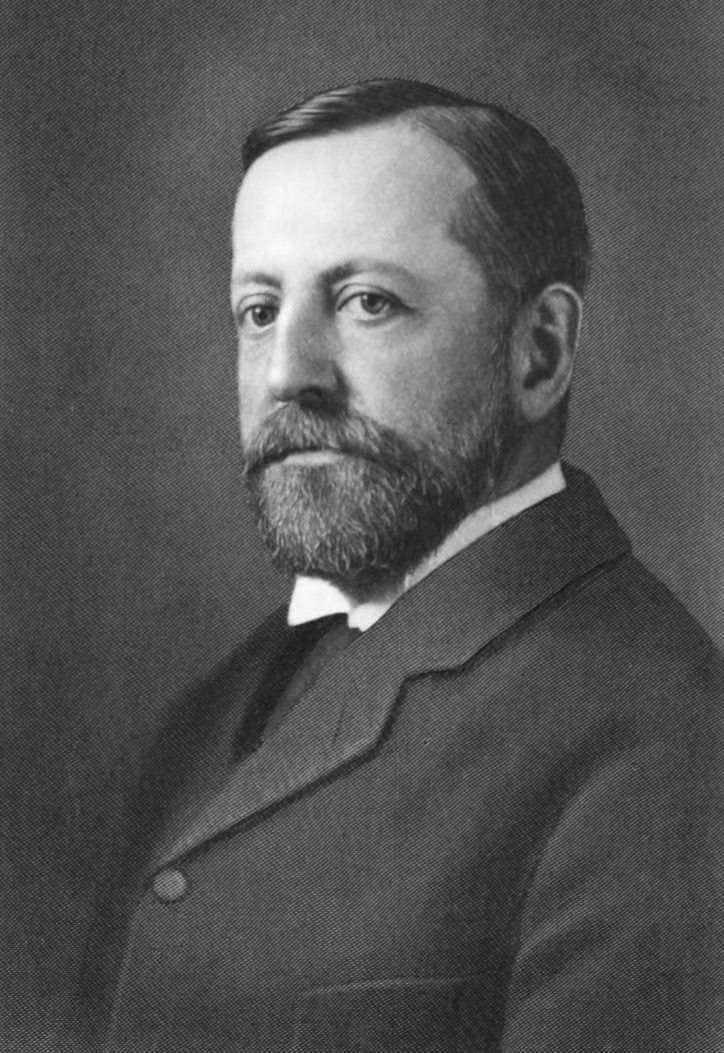
Pope Yeatman was born in St. Louis in 1861 and took his mining engineer’s degree at Washington University there in 1883. In 1895 he went to the gold fields of South Africa, where he managed the Robinson Deep mine, then the Simmer and Jack, and then the Randfontein Estates on the Rand.
In 1904 he came home to be chief consulting engineer for the Guggenheims, the copper and smelting family, succeeding John Hays Hammond. His summers in Alaska in 1906 and 1909 helped shape the Guggenheims’ Alaska ventures, and he took charge of the great El Teniente copper mine in Chile and examined Chuquicamata for them.
In the First World War he went to Washington, and in 1918 he took over the non-ferrous metals division of the War Industries Board, which kept copper, lead and zinc flowing to the war. The War Department gave him the Distinguished Service Medal in 1923. He died at Chestnut Hill, Philadelphia, in 1953, at ninety-two.
Yeatmanite
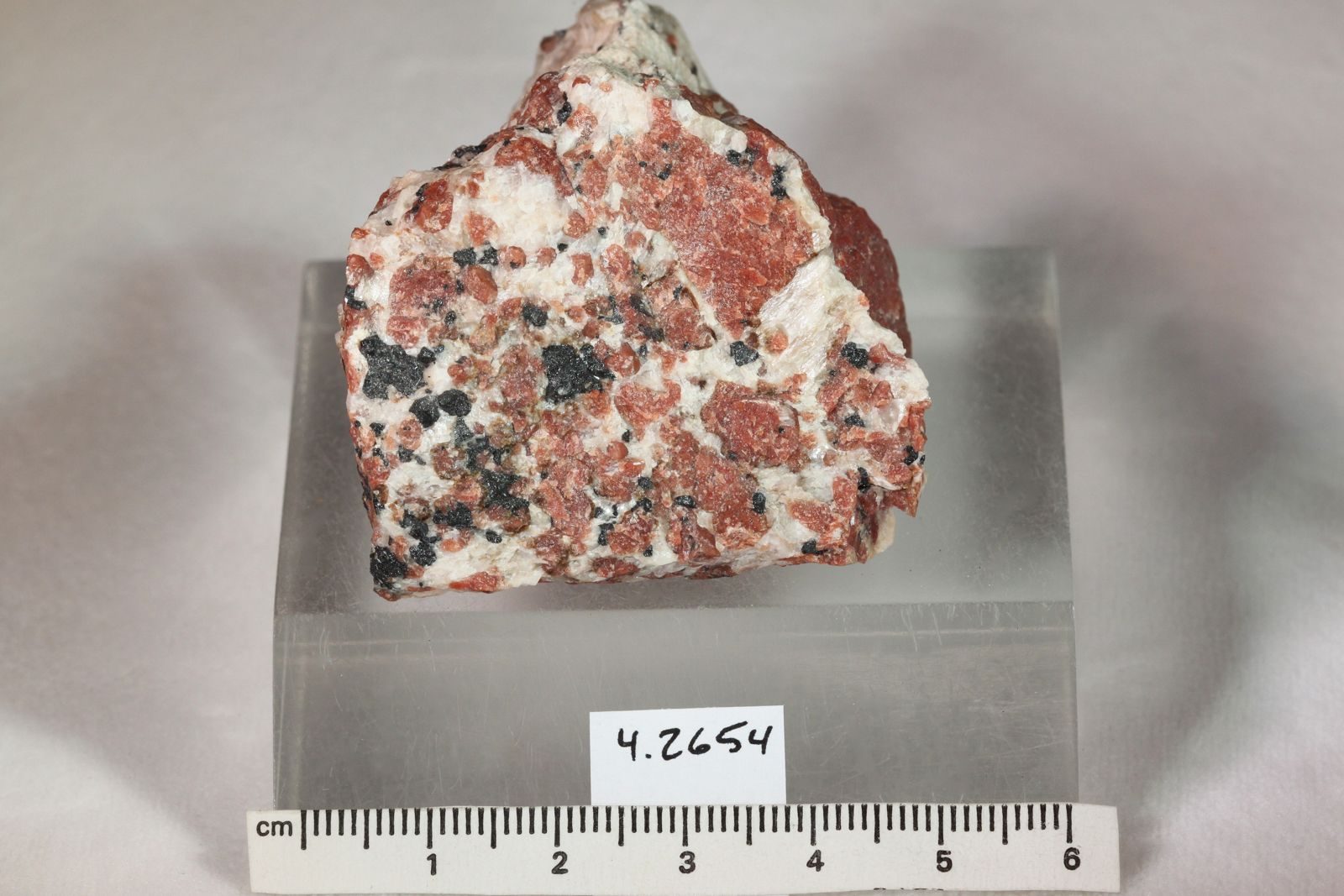
In his later years Yeatman worked closely with the New Jersey Zinc Company on its mining and milling at Franklin. In the spring of 1937 a few specimens came out of the Franklin mine with an unfamiliar pink mineral in them. L. H. Bauer, the company chemist, found it to be sarkinite, known before only from Sweden. Embedded in the green willemite beside it were a few clove-brown plates, the largest barely more than a centimeter across, of something new.
Charles Palache, Bauer and Harry Berman described it in 1938 as a silicate and antimonate of manganese and zinc, and named it yeatmanite, “in honor of Pope Yeatman, the distinguished mining engineer, who has been closely associated during recent years with mining and milling operations at Franklin.” It is a speck of brown in a famous mine, named for a man whose work ranged from the Rand to the Andes.
In The Picking Table
Frank Z. Edwards opened his Post Palache Mineral Review with yeatmanite, quoting the 1938 description and its dedication to Yeatman and counting the few specimens known (vol. 17, no. 1, March 1976). The journal abstracted Pete J. Dunn and Peter B. Leavens’s “Yeatmanite: new data,” with its second and third parageneses at Franklin (vol. 21, no. 2, September 1980), and soon after reported a fourth occurrence, from the Sterling Hill mine (vol. 22, no. 1, March 1981). John L. Baum’s “Subsidence at the Franklin mine” (vol. 32, no. 1, Spring 1991) quotes the reports of 1932 and 1933 in which the consulting firm of Yeatman & Berry weighed the cracking of the ground above the ore body. Fred J. Parker tells how a specimen he sold as “altered bannisterite” became “the Belsky yeatmanite” (vol. 40, 1999), and in 2003 the Franklin Mineral Museum’s news noted that yeatmanite was no longer unique to Franklin, having been found in Sweden and Canada (vol. 44, no. 2, Fall 2003). No article on Pope Yeatman’s life has appeared in The Picking Table.
Sources and further reading
- Mining Foundation of the Southwest: Pope Yeatman. Hall of Fame
- Palache, C., Bauer, L. H., and Berman, H., 1938, Yeatmanite, a new mineral, and sarkinite from Franklin, New Jersey. American Mineralogist, vol. 23, p. 527–530. PDF
- Pope Yeatman. Wikipedia
As far as we can find, this life has not been written up in The Picking Table. Written with Claude, an AI model made by Anthropic, from the sources listed above, and checked against them. October 2026.