The iron and manganese mines of Långban and their neighbors in Värmland, Sweden, which share more rare minerals with Franklin and Sterling Hill than any other place, with a checked list of species found at both.
Where Långban is

Långban lies in the province of Värmland, in west-central Sweden, about twenty kilometers north-northeast of the town of Filipstad, at the western edge of the old Bergslagen ore district.
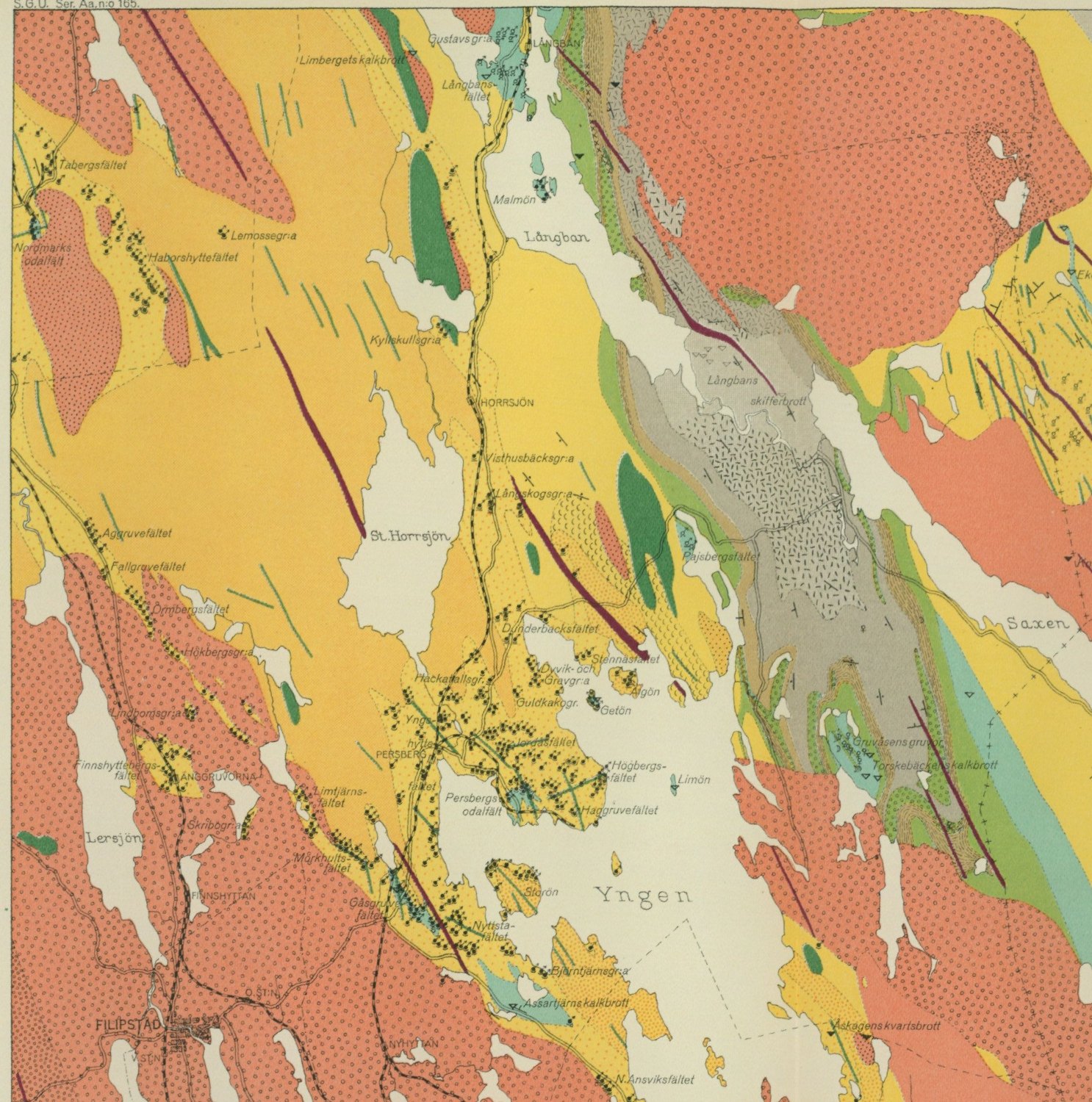
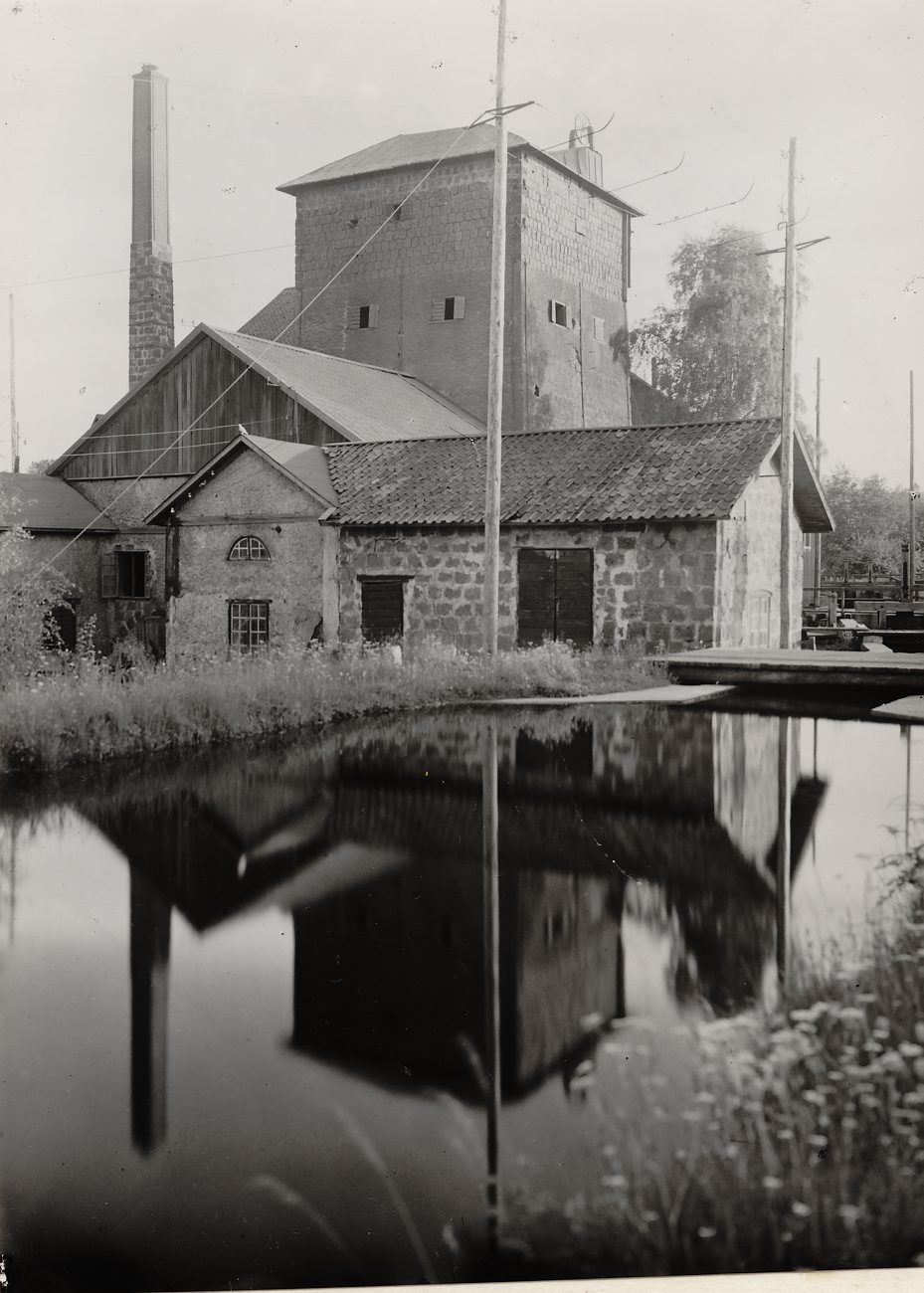
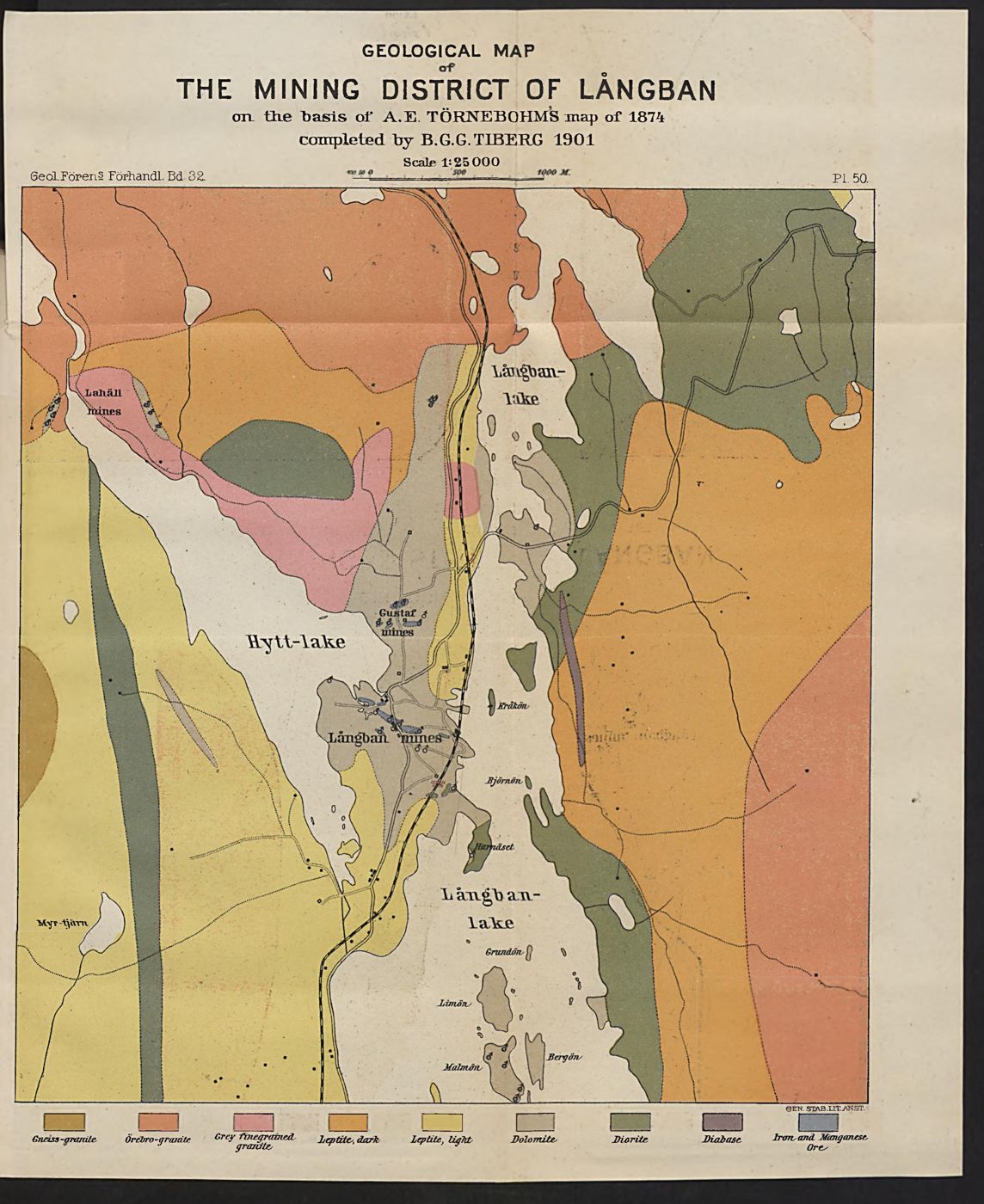
Gustaf Flink, who gave his later years to its minerals, described the setting in the American Mineralogist in 1926: the manganese mines that had made the district known to mineralogists formed a chain of three fields, Nordmark with Jakobsberg in the northwest, Långban in the middle, and Pajsberg with Harstigen in the southeast. Långban was mined for iron ore and, from the mid-nineteenth to the mid-twentieth century, for manganese; in its last fifteen years only dolomite was taken, and the mine closed in 1972 (Jonsson and others, 2025).
The ores are lenses of iron oxides (hematite and magnetite) and manganese oxides (hausmannite and braunite) in dolomitic marble and metamorphosed volcanic rocks, formed about 1.9 billion years ago and later recrystallized by regional metamorphism at roughly 550–600 °C. The iron and manganese ores lie apart, as a rule separated by dolomite or leptite. The Franklin mine and the Sterling Hill mine at Ogdensburg are also metamorphosed ores in marble, but their chief minerals are different, and zinc, the metal of the New Jersey mines, is wholly absent from the Långban ores. Charles Palache, after a brief visit to Långban, set out the parallels and the differences in a short paper of 1929; Paul B. Moore, who studied the Långban collections in Stockholm, wrote in 1970 that similar minerals at the two places “merely” meant similar temperatures and compositions during metamorphism, not a common origin, as quoted in The Picking Table in 1972.
Långban is among the richest mineral localities known. A 2025 description of a new mineral from the mine counts nearly 400 species there, close to 80 of them first described from Långban (Jonsson and others, 2025). On Mindat, the locality is Långban; the two local mines are the Franklin Mine and the Sterling Mine.
Minerals found at both
The list gives the rarer species recorded both at Franklin or Sterling Hill and at Långban or one of its neighbors. Each occurrence is taken from the species’ page in the Handbook of Mineralogy (linked at each name) or from Palache’s Minerals of Franklin and Sterling Hill (1935); the place and year of first description are from the International Mineralogical Association’s catalogue of type mineral specimens. Common rock-forming minerals are left out.
First described at Franklin or Sterling Hill, later found in Sweden
Tephroite: Sterling Hill, 1823; Långban, Harstigen.
Roeblingite: Franklin, 1897; Långban.
Nasonite: Franklin, 1899; Långban, Jakobsberg.
Hancockite: Franklin, 1899; Jakobsberg.
Leucophoenicite: Franklin, 1899; Pajsberg.
Margarosanite: Franklin, 1916; Långban, Jakobsberg (its crystal form was first known from Flink’s Långban crystals).
Feitknechtite: Franklin, 1965; Långban, Pajsberg.
Johnbaumite: Franklin, 1980; Harstigen (the Handbook has it “at the Harstigen mine, Långban,” while Vandall T. King, in his talk of 1986, counted it among the minerals that do not occur at Långban itself).
Turneaureite: described in 1985 by Dunn, Petersen and Peacor from Franklin, Långban, and Balmat, New York, together.
First described in Värmland, later found at Franklin or Sterling Hill
Hedyphane: Långban, 1830; Franklin (Palache).
Pyrochroite: Pajsberg, 1864; Långban; Franklin, Sterling Hill.
Pyroaurite: Långban, 1865; Sterling Hill.
Manganosite: Värmland, 1874; Långban, Nordmark; Franklin.
Barylite: Långban, 1876; Franklin (Palache).
Ganomalite: Långban, 1876; Franklin.
Allactite: Moss mine, Nordmark, 1884; Långban; Franklin, Sterling Hill.
Synadelphite: Moss mine, 1884; Långban; Sterling Hill.
Adelite: Kittel mine, Nordmark, 1884; Långban, Jakobsberg; Franklin, Sterling Hill.
Sarkinite: Pajsberg, 1885; Långban, Harstigen; Franklin, Sterling Hill.
Barysilite: Harstigen, 1888; Långban, Jakobsberg; Franklin.
Brandtite: Harstigen, 1888; Långban; Sterling Hill.
Caryopilite: Harstigen, 1889; Långban; Franklin, Sterling Hill.
Flinkite: Harstigen, 1889, named for Gustaf Flink; Långban; Franklin.
Ganophyllite: Harstigen, 1890; Långban; Franklin.
Pyrophanite: Harstigen, 1890; Sterling Hill.
Svabite: Jakobsberg, 1891; Harstigen, Långban; Franklin (Palache).
Manganberzeliite: Långban, 1894; Franklin.
Celsian: Jakobsberg, 1895; Långban; Franklin.
Tilasite: Långban, 1895; Sterling Hill.
Pyrobelonite: Långban, 1919; Franklin.
Akrochordite: Långban, 1922; Sterling Hill.
Magnussonite: Långban, 1956; Sterling Hill.
Manganhumite: Brattfors mine, Nordmark, 1978; Franklin.
First described elsewhere, found at both
Kentrolite: southern Chile, 1881; Långban, Jakobsberg, Harstigen; Franklin.
Friedelite: Hautes-Pyrénées, France, 1876; Harstigen; Franklin, Sterling Hill.
Hyalophane: Långban, Jakobsberg, Harstigen; Franklin.
Native lead: Långban, Harstigen; Franklin.
Here is the same list as a table. The notes are in the list above.
| Mineral | First described | Year | New Jersey | Sweden |
|---|---|---|---|---|
| First described at Franklin or Sterling Hill, later found in Sweden | ||||
| Tephroite | Sterling Hill | 1823 | Sterling Hill | Långban, Harstigen |
| Roeblingite | Franklin | 1897 | Franklin | Långban |
| Nasonite | Franklin | 1899 | Franklin | Långban, Jakobsberg |
| Hancockite | Franklin | 1899 | Franklin | Jakobsberg |
| Leucophoenicite | Franklin | 1899 | Franklin | Pajsberg |
| Margarosanite | Franklin | 1916 | Franklin | Långban, Jakobsberg |
| Feitknechtite | Franklin | 1965 | Franklin | Långban, Pajsberg |
| Johnbaumite | Franklin | 1980 | Franklin | Harstigen |
| Turneaureite | Franklin, Långban and Balmat, N.Y., together | 1985 | Franklin | Långban |
| First described in Värmland, later found at Franklin or Sterling Hill | ||||
| Hedyphane | Långban | 1830 | Franklin | Långban |
| Pyrochroite | Pajsberg | 1864 | Franklin, Sterling Hill | Pajsberg, Långban |
| Pyroaurite | Långban | 1865 | Sterling Hill | Långban |
| Manganosite | Värmland | 1874 | Franklin | Långban, Nordmark |
| Barylite | Långban | 1876 | Franklin | Långban |
| Ganomalite | Långban | 1876 | Franklin | Långban |
| Allactite | Moss mine, Nordmark | 1884 | Franklin, Sterling Hill | Nordmark, Långban |
| Synadelphite | Moss mine, Nordmark | 1884 | Sterling Hill | Nordmark, Långban |
| Adelite | Kittel mine, Nordmark | 1884 | Franklin, Sterling Hill | Nordmark, Långban, Jakobsberg |
| Sarkinite | Pajsberg | 1885 | Franklin, Sterling Hill | Pajsberg, Långban, Harstigen |
| Barysilite | Harstigen | 1888 | Franklin | Harstigen, Långban, Jakobsberg |
| Brandtite | Harstigen | 1888 | Sterling Hill | Harstigen, Långban |
| Caryopilite | Harstigen | 1889 | Franklin, Sterling Hill | Harstigen, Långban |
| Flinkite | Harstigen | 1889 | Franklin | Harstigen, Långban |
| Ganophyllite | Harstigen | 1890 | Franklin | Harstigen, Långban |
| Pyrophanite | Harstigen | 1890 | Sterling Hill | Harstigen |
| Svabite | Jakobsberg | 1891 | Franklin | Jakobsberg, Harstigen, Långban |
| Manganberzeliite | Långban | 1894 | Franklin | Långban |
| Celsian | Jakobsberg | 1895 | Franklin | Jakobsberg, Långban |
| Tilasite | Långban | 1895 | Sterling Hill | Långban |
| Pyrobelonite | Långban | 1919 | Franklin | Långban |
| Akrochordite | Långban | 1922 | Sterling Hill | Långban |
| Magnussonite | Långban | 1956 | Sterling Hill | Långban |
| Manganhumite | Brattfors mine, Nordmark | 1978 | Franklin | Nordmark |
| First described elsewhere, found at both | ||||
| Kentrolite | southern Chile | 1881 | Franklin | Långban, Jakobsberg, Harstigen |
| Friedelite | Hautes-Pyrénées, France | 1876 | Franklin, Sterling Hill | Harstigen |
| Hyalophane | Franklin | Långban, Jakobsberg, Harstigen | ||
| Native lead | Franklin | Långban, Harstigen | ||
In 1935 Palache could write that margarosanite and nasonite, first found at Franklin, were known elsewhere only at Långban, and that barysilite and ganophyllite had been known only in Sweden before they turned up at Franklin. Later finds elsewhere have changed some of these statements, but the list shows how many of the rarest local minerals have their nearest kin in Värmland.
One more pair is a feldspar. Feldspar is the commonest mineral group in the Earth’s crust, but at Franklin and Långban some of it carries barium in place of potassium. Hyalophane, a barium-bearing potassium feldspar, was first described from the Binn valley in Switzerland. At Franklin, Palache reported, “dark-red coarse-granular hyalophane, associated with black manganese-biotite and yellow garnet, was found in the old dump of the Parker shaft”; the chemists of the New Jersey Zinc Company had discovered it. On the next page he drew the parallel: hyalophane “adds another mineral to the list of those common to the Franklin district and to the manganese mines of Långban and Jakobsberg, Sweden. The Swedish hyalophane is also a granular red feldspar and is associated with manganese-epidote.” Its pure barium relative, celsian, was first described at Jakobsberg in 1895 and is in the list above.
In The Picking Table
The Picking Table has followed Långban since its early years. “The Minerals of Langban” (vol. 5, no. 1, February 1964) reports Brian Mason’s talk of October 1962 comparing the two districts; with that issue members received a translation of J. H. Weslien’s paper “Information Concerning the Minerals of Langban, Sweden.” “Langban Mineral Study” (vol. 8, no. 1, February 1967) quotes Paul B. Moore’s letters from his year with the Långban collections in Stockholm, including a list of eight Långban minerals he thought should occur at Franklin; the same issue abstracts F. F. Foit’s finding that Långban roeblingite is structurally identical to the Franklin mineral. A note in vol. 13, no. 2 (August 1972) commends Moore’s 1970 paper on the Långban-type deposits and quotes his case against a common origin. Notes on species found at both places include magnussonite (vol. 18, no. 1, March 1977), ganomalite (vol. 20, no. 1, March 1979), akrochordite (vol. 22, no. 2, September 1981) and turneaureite (vol. 26, 1985).
Omer S. Dean’s “From the Editor’s Desk” in vol. 28, no. 1 (Spring 1987) summarizes Vandall T. King’s talk “Franklin is not like Långban!” with its long list of contrasts. Modris Baum, John Ebner and Ralph Thomas, in “Through the Looking Glass: Comparative Numerology of Franklin and Sterling Hill, New Jersey” (vol. 41, no. 2, Fall 2000), count 134 minerals shared by Långban and Franklin–Sterling Hill. Vol. 60, no. 1 (Spring 2019) has two obituaries of Moore, by Mark Boyer and by Tony Nikischer, with his work on the Flink collection and in the Swedish mines. No full article on Långban itself, its geology or the history of its mines, has appeared in The Picking Table.
Sources and further reading
- Anthony, J. W., Bideaux, R. A., Bladh, K. W., and Nichols, M. C., eds., Handbook of Mineralogy. Mineral Data Publishing: distribution notes for each species listed (linked at each name). Handbook
- Comparative numerology of Franklin and Sterling Hill, New Jersey. The Picking Table, vol. 41, no. 2 (Fall 2000), p. 6–9. The Picking Table (PDF)
- Dean, O. S., 1987, From the Editor’s Desk (on V. T. King’s talk “Franklin is not like Langban!”). The Picking Table, vol. 28, no. 1 (Spring 1987). The Picking Table (PDF)
- Dunn, P. J., Peacor, D. R., and Sturman, B. D., 1979, Paulmooreite, a new lead arsenite mineral from Långban, Sweden. American Mineralogist, vol. 64, p. 352–354 (named for Paul B. Moore, in recognition of his work on Långban). PDF
- Flink, G., 1926, Långban and its minerals. American Mineralogist, vol. 11, p. 195–199. PDF
- International Mineralogical Association, Commission on Museums, Catalogue of type mineral specimens (CTMS), version of June 2026: type localities and first descriptions. PDF
- Jonsson, E., Hålenius, U., Majka, J., and Bosi, F., 2025, Skogbyite, a new zirconium mineral in the braunite group from Långban, Bergslagen, Sweden. European Journal of Mineralogy, vol. 37, p. 269–277 (on the deposit, its geology, history and species count). DOI
- Langban Mineral Study (letters of Paul B. Moore); New Data on Roeblingite (abstract of Foit, 1966). The Picking Table, vol. 8, no. 1 (February 1967), p. 2–4 and 9. The Picking Table (PDF)
- Långban (locality page). Mindat
- Langban (on Moore, P. B., 1970, Mineralogy and chemistry of Långban-type deposits in Bergslagen, Sweden, Mineralogical Record, vol. 1, p. 154–172). The Picking Table, vol. 13, no. 2 (August 1972). The Picking Table (PDF)
- The Minerals of Langban (Brian Mason’s talk of October 20, 1962). The Picking Table, vol. 5, no. 1 (February 1964), p. 9–10. The Picking Table (PDF)
- Obituary of Paul B. Moore. The Picking Table, vol. 60, no. 1 (Spring 2019). The Picking Table (PDF)
- Palache, C., 1929, A comparison of the ore deposits of Långban, Sweden, with those of Franklin, New Jersey. American Mineralogist, vol. 14, p. 43–47. PDF
- Palache, C., 1935, The minerals of Franklin and Sterling Hill, Sussex County, New Jersey. U.S. Geological Survey Professional Paper 180. PDF
- Rönnow, S., 1923, Långbanshyttan, Värmland. Tekniska museet; CC0. Commons
- Sjögren, H., 1910, The Långban mines. Geologiska Föreningens i Stockholm Förhandlingar, vol. 32, part 3, with plates 50–51. archive.org
Written with Claude, an AI model made by Anthropic, from the sources listed above, and checked against them. October 2026.