Histories › A map written in minerals
Two rare minerals with the same crystal structure, one found at Franklin in 1874 and one at Sterling Hill a hundred years later, named for the hills and the river between them.
Found a hundred years apart
In 1983 Pete Dunn and Donald Peacor described two new minerals at once and called the pairing “unusual.” They had the same crystal structure, but one was a silicate and the other an arsenate, and although they came from the two neighboring zinc deposits, they had been “found 100 years apart.”
Kittatinnyite was found in 1874 in the Taylor Mine, one of the small mines later joined into the Franklin Mine, as a bright yellow coating on fractures in franklinite ore. It survived only because collectors kept the specimens for another mineral on them, then thought to be arseniosiderite and now known as bostwickite. Wallkilldellite turned up at Sterling Hill around 1974, dark red, as a few milligrams on a single specimen. The type specimen of kittatinnyite is at the Smithsonian.
The endless hills
Kittatinnyite, the authors wrote, “is named for the word kittatinny which, in the language of the Algonquin Indians who inhabited the Franklin area, meant ‘endless-hills’ in allusion to the topography of the Franklin area.” Kittatinny Mountain is the long ridge that runs across north-western New Jersey, the continuation of Pennsylvania’s Blue Mountain beyond the Delaware Water Gap. The Lenape word behind it is usually given as “endless hill” or “great mountain.”
The dell of the Wallkill
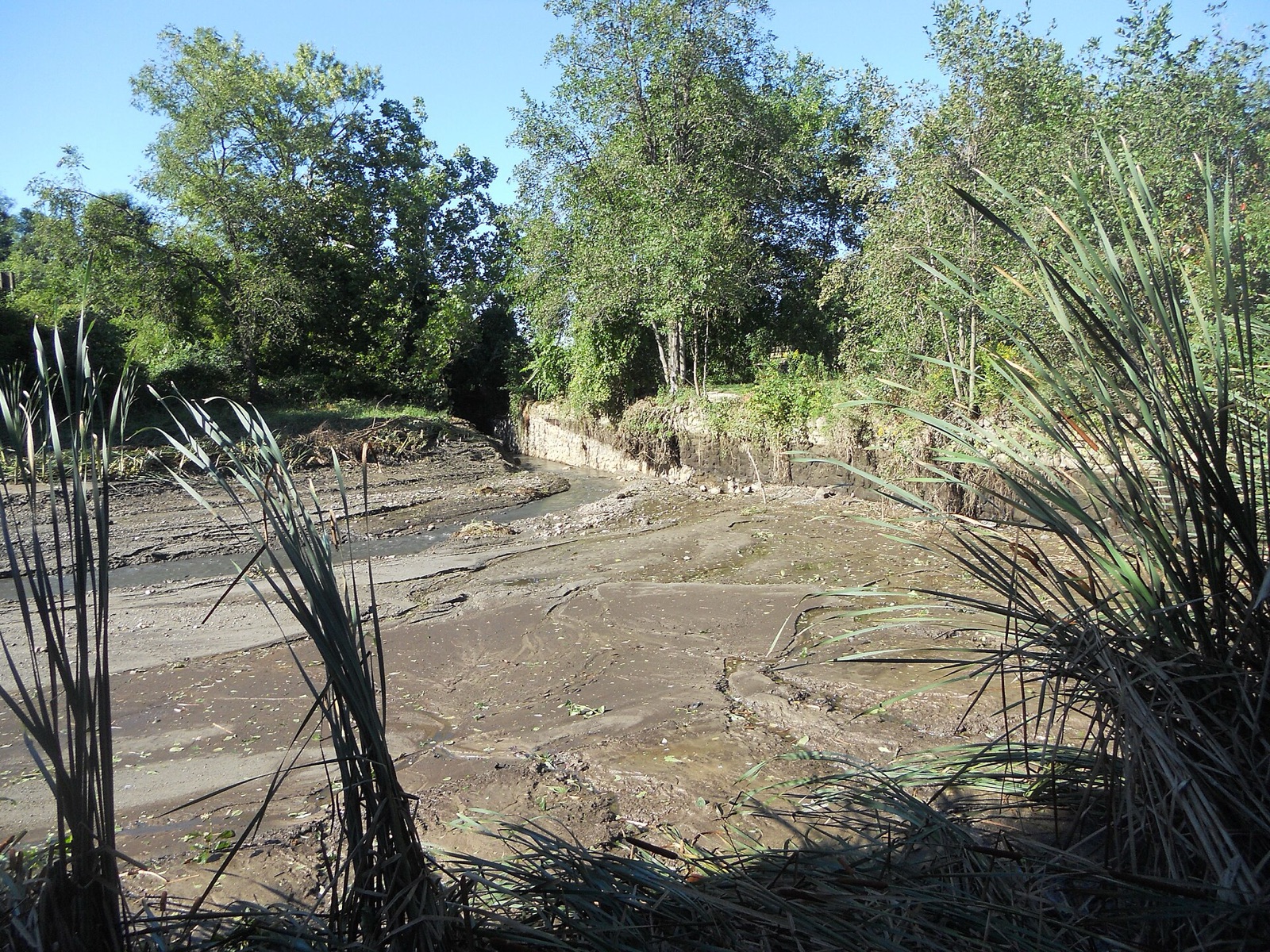
Wallkilldellite “is named for the dell of the Wallkill River, where the Franklin and Sterling Hill deposits outcropped in full view.” The river rises near Sparta and flows north, past Ogdensburg and Franklin and on into New York. Early settlers called it the Palse River, after New Paltz; when it was found to run past the New Paltz lands it was renamed for the Waal, the river in the Netherlands; kill is the old Dutch word for a stream.
So the two twins are named for the two sides of the same landscape: the hills that rise above the mines, and the valley where the ore first showed at the surface.
In The Picking Table
John L. Baum’s “The Taylor mine” (vol. 24, no. 2, Autumn 1983) tells the story of the mine where kittatinnyite was found, on the east vein first worked as the Buckwheat mine. The same issue announced both minerals as new to science, quoting Pete J. Dunn on the names: the “endless hills” and the dell of the Wallkill River. The next issue printed long extracts from the description by Dunn and Donald R. Peacor (vol. 25, no. 1, Spring 1984). Alfredo Petrov’s “Minerals from metamorphosed manganese deposits in Japan and their relationship to the Franklin-Sterling Hill mineral deposits” (vol. 50, no. 1, Spring 2009) lists “wallkilldellite-Mn” among the arsenates of the Gozaisho mine in Fukushima. No article on Kittatinny Mountain or the Wallkill River, or on the history of their names, has appeared in The Picking Table.
Sources and further reading
Written with Claude, an AI model made by Anthropic, from the sources listed above, and checked against them. October 2026.