Histories › A map written in minerals
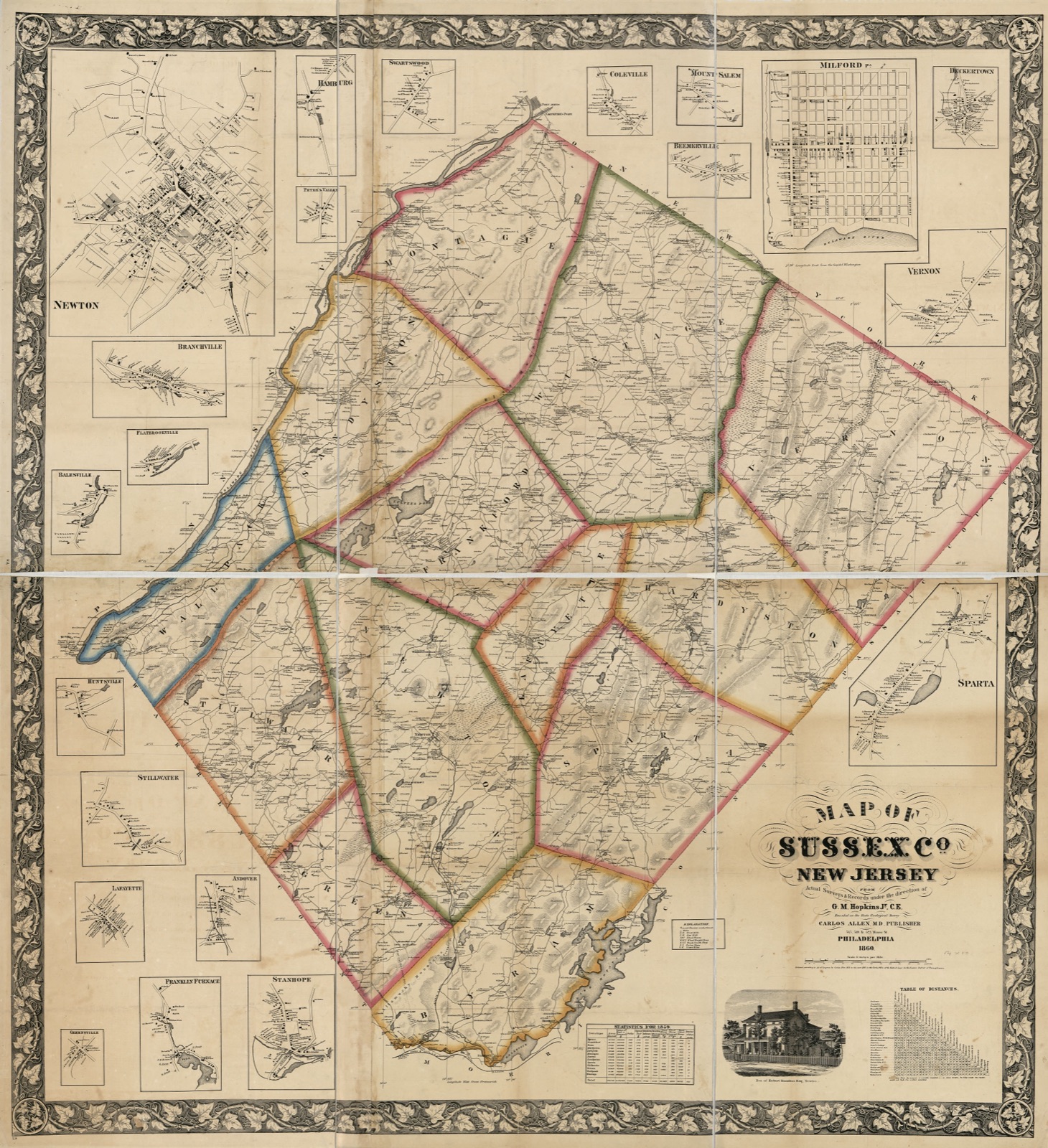
Two Franklin minerals carry the names of the colonial township and county that held the mines, one for a royal governor and one for an English county.
Sussexite, 1868
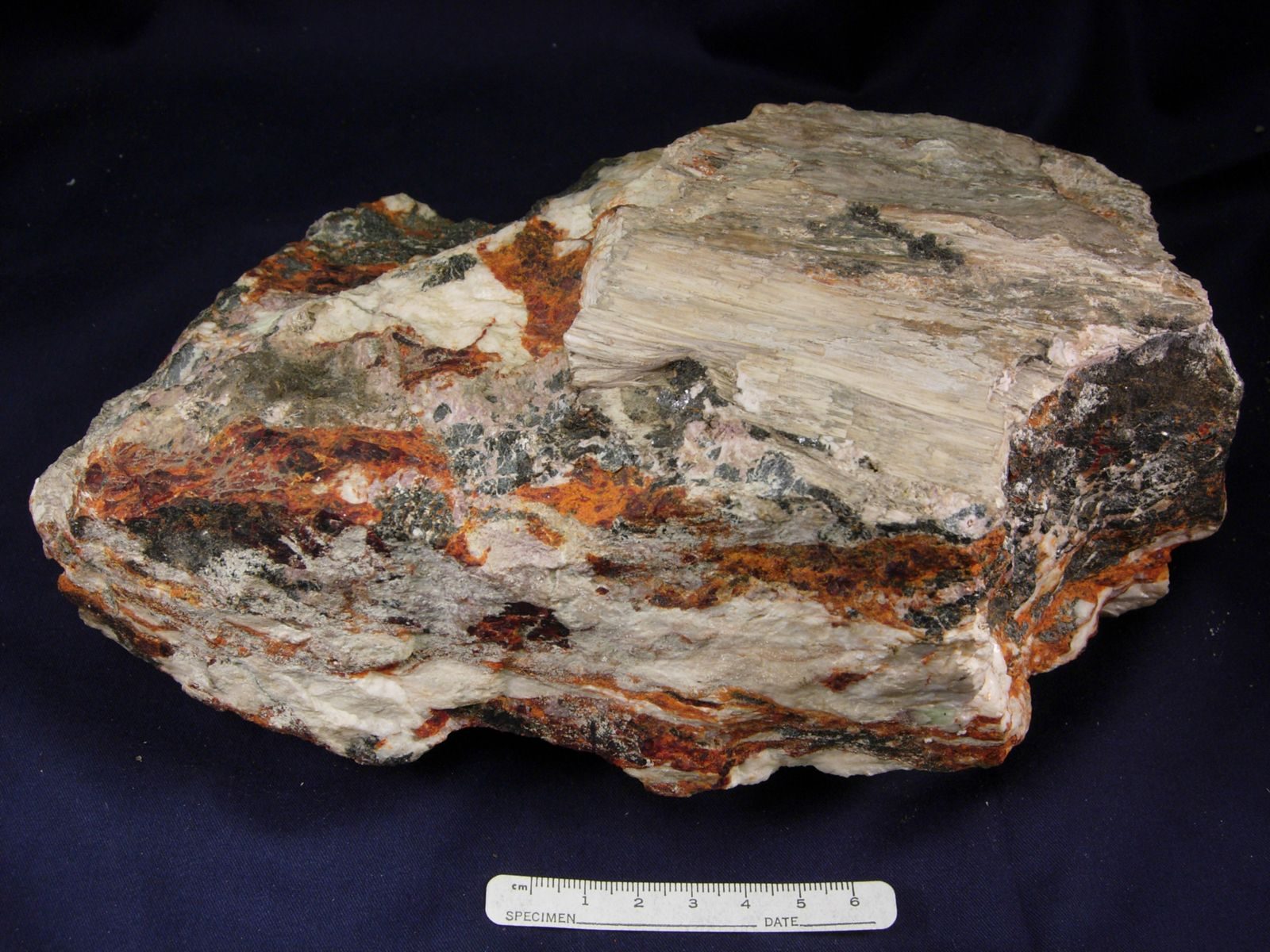
In 1867 George J. Brush of Yale’s Sheffield laboratory had a fibrous mineral from Mine Hill that he took for a fibrous zinc silicate, and he sent his assistant, William G. Mixter, back to collect more. Mixter brought home a specimen that looked the same, but under the blowpipe it proved to be something else, a hydrous borate of manganese. In 1868 Brush described it as “Sussexite, a new borate from Mine Hill, Franklin Furnace, Sussex Co., New Jersey.”
The county itself was carved out of Morris County in 1753 and named for the county of Sussex in England.
Hardystonite, 1899
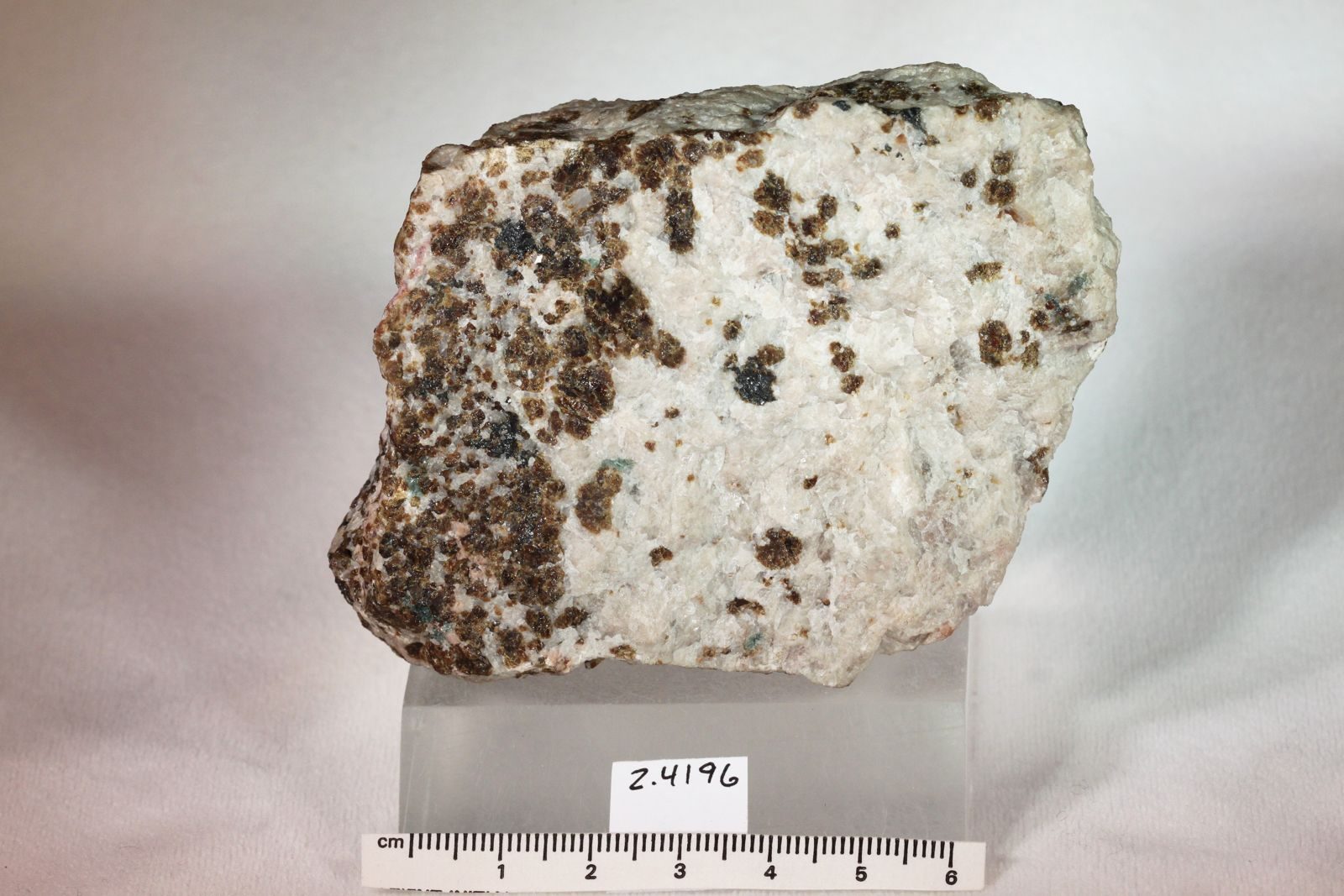
Thirty years later J. E. Wolff of Harvard described a new calcium-zinc silicate, and named it simply: “The mineral is named Hardystonite from Hardyston township, in which the Franklin mines are situated.” Hardystonite later became famous among collectors for its glow, a violet-blue under shortwave ultraviolet light.
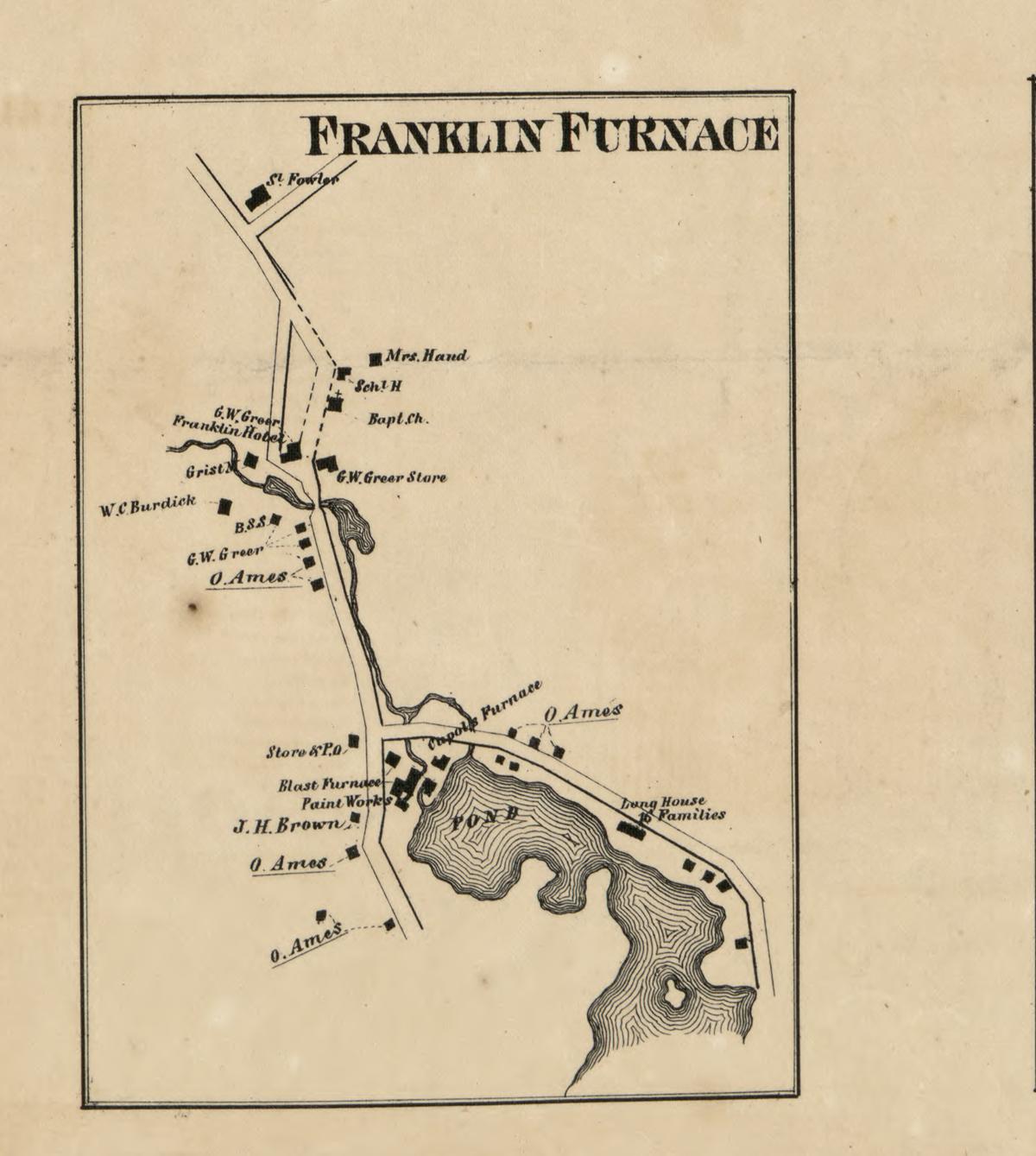
The township is older than the nation. It was set off from Newton Township by royal charter on February 25, 1762, and named for Josiah Hardy, the royal governor of New Jersey from 1761 to 1763, a merchant and the son of an English admiral. The British spelling, Hardiston, became Hardyston after the Revolution.
So two minerals in a Franklin collection still carry the colonial map: the county named for England, and the township named for a king’s governor.
In The Picking Table
Clifford Frondel and Jun Ito’s “Sussexite from Sterling Hill, New Jersey”, reprinted from the American Mineralogist (vol. 6, no. 2, August 1965), reports sussexite in quantity from the deep levels of the Sterling mine. Frank Z. Edwards’s “The exclusive minerals of Franklin/Ogdensburg, N.J. (as of January 1968)” (vol. 9, no. 1, February 1968) kept hardystonite on the list of minerals known only from the district but struck sussexite from it, since it had been found in 1934 at the Chicagoan mine in Iron County, Michigan. William C. Mattison’s “Hardystonite fluorescence emission spectrum” (vol. 52, no. 2, Fall 2011) measures the glow. William R. Truran’s “From furnace to borough—Franklin’s transformation” (vol. 54, no. 1, Spring 2013) begins with the township and its naming for Josiah Hardy. Earl R. Verbeek and James Van Fleet’s “Hardystonite from the Desert View mine, California” (vol. 55, no. 1, Spring 2014) reports the first hardystonite found outside Franklin, and Richard C. Bostwick’s entry for hardystonite in “Fluorescent minerals of Franklin and Sterling Hill, N.J.” (vol. 57, no. 2, Fall 2016) describes its violet to violet-blue response. No article on Josiah Hardy, on the naming of Sussex County, or on Brush’s and Wolff’s first descriptions has appeared in The Picking Table.
Sources and further reading
- Brush, G. J., 1868, On sussexite, a new borate from Mine Hill, Franklin Furnace, Sussex Co., New Jersey. American Journal of Science, 2nd series, vol. 46, p. 240–243. archive.org
- Hardyston Township, New Jersey; Josiah Hardy; Sussex County, New Jersey. Wikipedia
- Hopkins, G. M., 1860, Map of Sussex Co., New Jersey. Library of Congress. Library of Congress
- Wolff, J. E., 1899, On hardystonite, a new calcium-zinc silicate from Franklin Furnace, N.J. Proceedings of the American Academy of Arts and Sciences, vol. 34, p. 477–481. archive.org
Written with Claude, an AI model made by Anthropic, from the sources listed above, and checked against them. October 2026.