Histories › The people behind the minerals
A Philadelphia machine-tool maker built what was called the finest mineral collection ever assembled by one person, and J. P. Morgan bought it for New York.
The collector
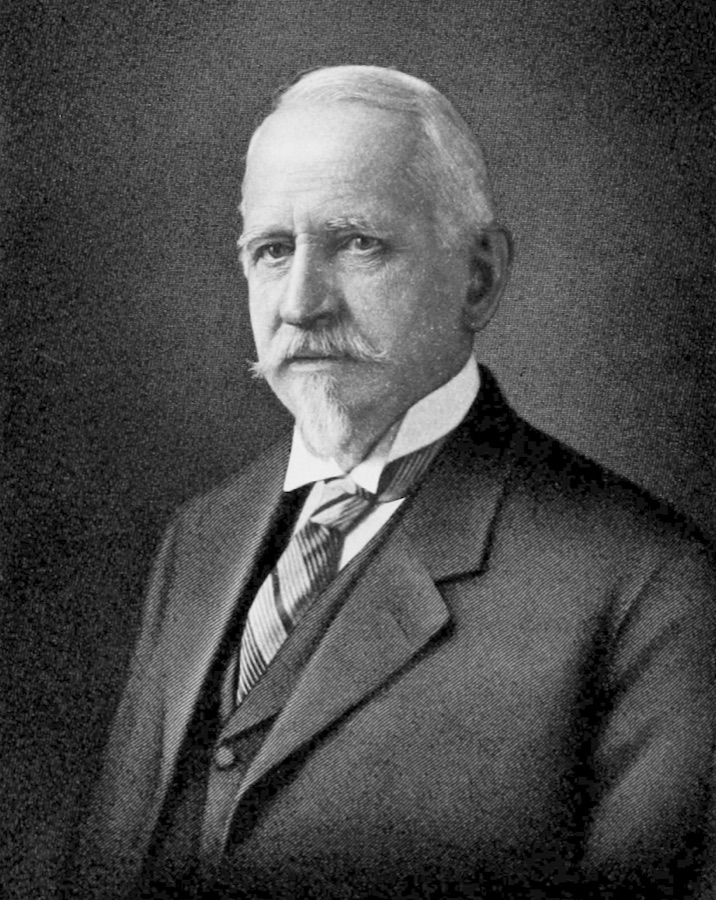
Clarence Sweet Bement (1843–1923) made his money in Philadelphia machine tools, in the family firm of William B. Bement & Son, and spent much of it on minerals. Over the last decades of the nineteenth century he gathered about 12,300 specimens, with some 580 meteorites, chosen for perfection. The American Museum of Natural History still calls it the finest mineral collection ever assembled by an individual.
In 1900 or 1901 (the museum’s own pages give both years) the gem expert George F. Kunz of Tiffany’s persuaded J. P. Morgan of what the collection could mean for the public, and Morgan bought it for $100,000 and gave it to the American Museum in New York, where it became the heart of the mineral hall.
Bementite
In 1887 George A. Koenig of the University of Pennsylvania named a pale, soft manganese silicate from Franklin bementite, for the Philadelphia collector. It proved a troublesome mineral: in the 1920s it was found to be the same as minerals called ectropite and caryopilite, and in 1963 a Japanese study was still titled “New data on the so-called bementite.” Its structure was not worked out until 1994. The 1920s verdict did not last: today bementite, Mn7Si6O15(OH)8, and caryopilite, Mn3Si2O5(OH)4, stand as two separate species on the International Mineralogical Association’s list, and the name ectropite has dropped out of use (IMA list, 2026).
Bement’s cases outlasted his collection’s stay in Philadelphia. The mahogany cabinets were bought by E. P. Hancock, the collector of Franklin minerals, and they came with Hancock’s Franklin specimens to Harvard.
In The Picking Table
The journal noted Kenzo Ito’s study of the thermal transformation of bementite as early as vol. 5, no. 2 (August 1964), and a research report of 1991 summarizes R. A. Eggleton and Stephen Guggenheim’s new model for its structure (vol. 32, no. 1, Spring 1991). F. W. Miller’s “Harvard’s Franklin collection” (vol. 28, no. 1, Spring 1987) tells of the mahogany cases built for Bement that now hold Hancock’s specimens at Harvard. John A. Jaszczak and Stanley J. Dyl II, in “Zincite comes to light” (vol. 36, no. 2, Fall/Winter 1995), mention a type specimen of bementite in the Seaman Mineral Museum at Michigan Tech, “obtained by Prof. George A. Koenig from C. S. Bement.” In 1992 the Society scheduled a lecture by Joseph J. Peters of the American Museum of Natural History, “Clarence S. Bement: the consummate collector,” for November 21 (vol. 33, no. 2, Autumn/Winter 1992), but no account of Bement’s life has appeared in The Picking Table.
Sources and further reading
- American Museum of Natural History: the minerals and gems collection. AMNH
- The Bement collection of minerals. iRocks
- Heinrich, A. R., Eggleton, R. A., and Guggenheim, S., 1994, Structure and polytypism of bementite. American Mineralogist, vol. 79, p. 91–106.
- Kato, T., 1963, New data on the so-called bementite. Mineralogical Journal (Japan), vol. 6, p. 93–103.
- Larsen, E. S., 1925, The identity of ectropite and bementite. American Mineralogist, vol. 10, p. 418–421. PDF
As far as we can find, this life has not been written up in The Picking Table. Written with Claude, an AI model made by Anthropic, from the sources listed above, and checked against them. October 2026.