The color vocabulary of the mineralogists, in which every named color is matched to an animal, a plant and a mineral.
A vocabulary for minerals
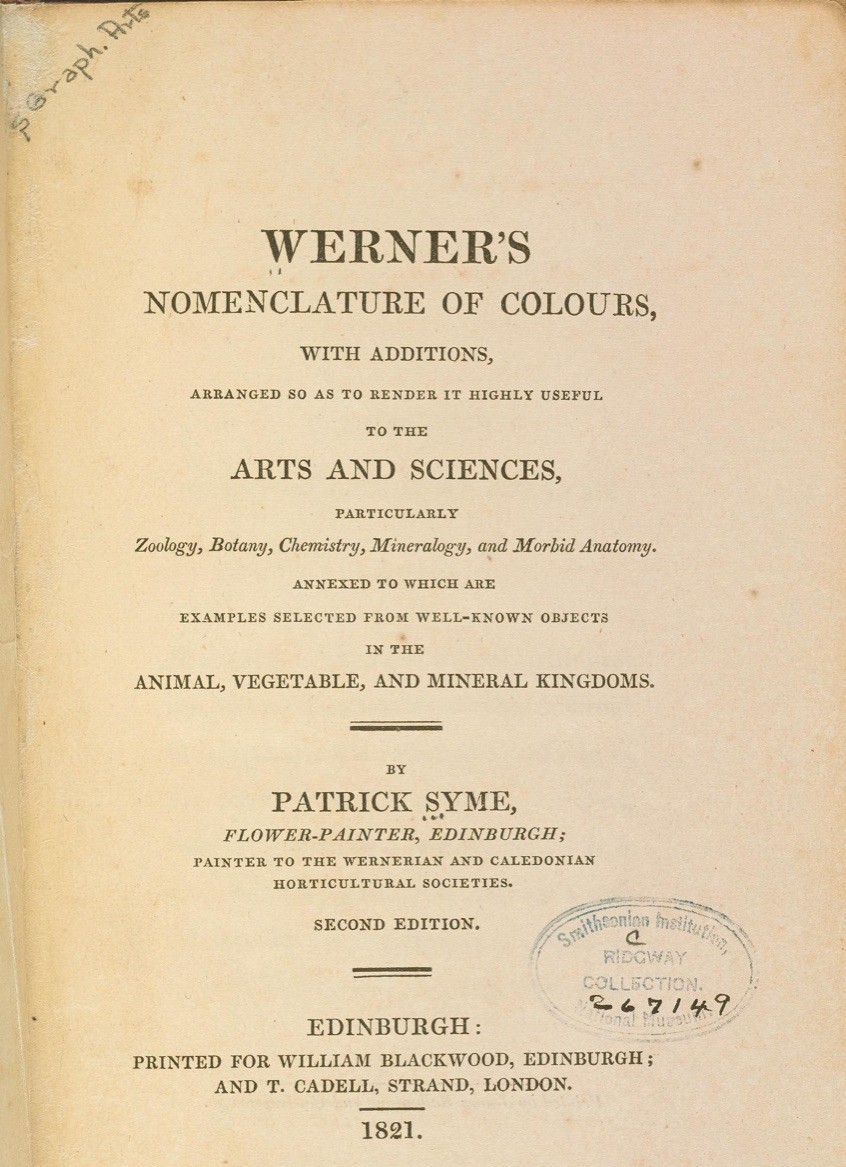
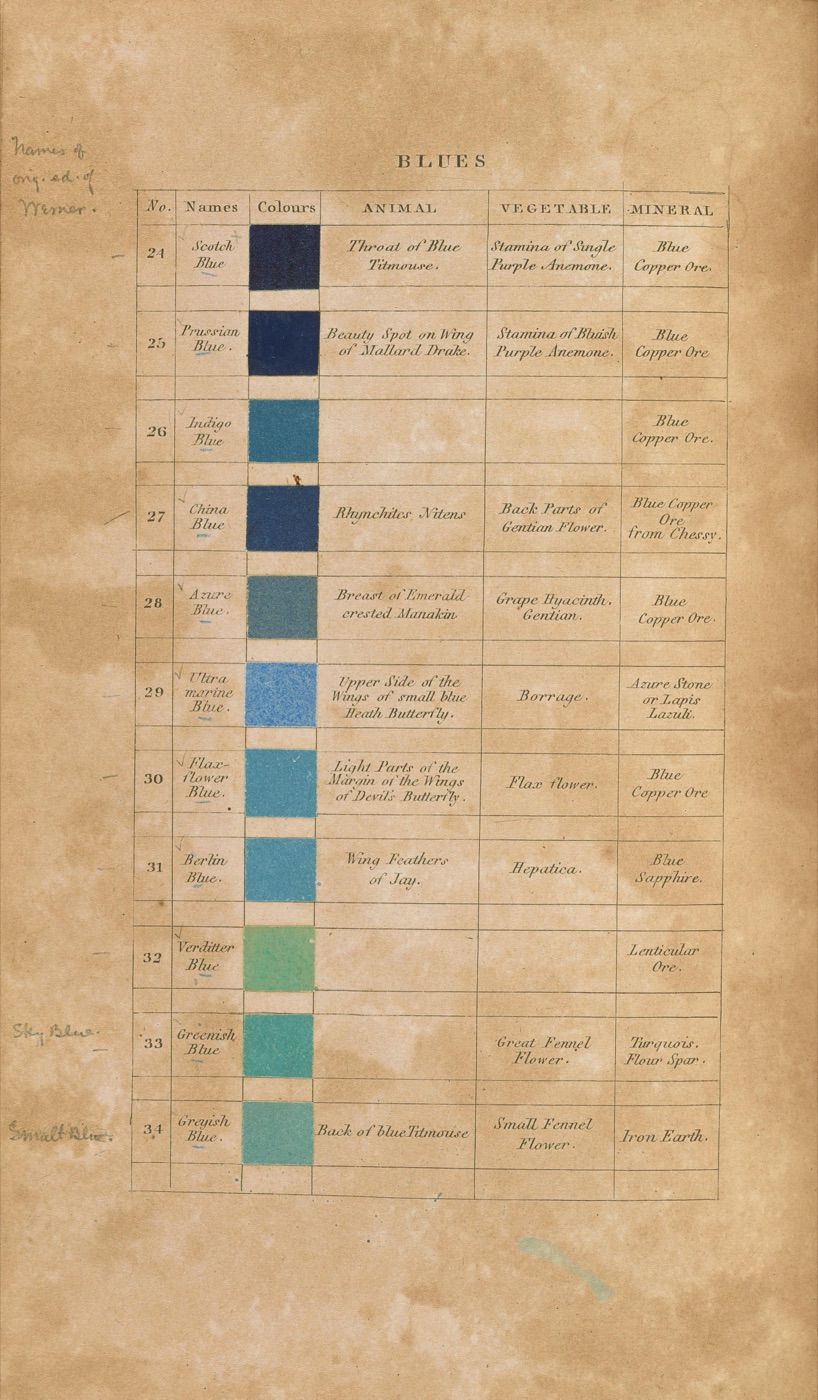
Abraham Gottlob Werner (1749–1817), who taught mineralogy at the mining academy of Freiberg in Saxony, described minerals by their external characters: color, luster, hardness, fracture. In his treatise of 1774 he set out a vocabulary of colors so that a mineral seen in one place could be described in words understood in another.
In Edinburgh the flower painter Patrick Syme turned that vocabulary into a book of painted swatches, published in 1814 and in a second edition in 1821: Werner’s Nomenclature of Colours, with additions, arranged so as to render it highly useful to the arts and sciences. Each color has a number, a name, a hand-painted swatch, and an example from each of the three kingdoms of nature.
The mineral examples
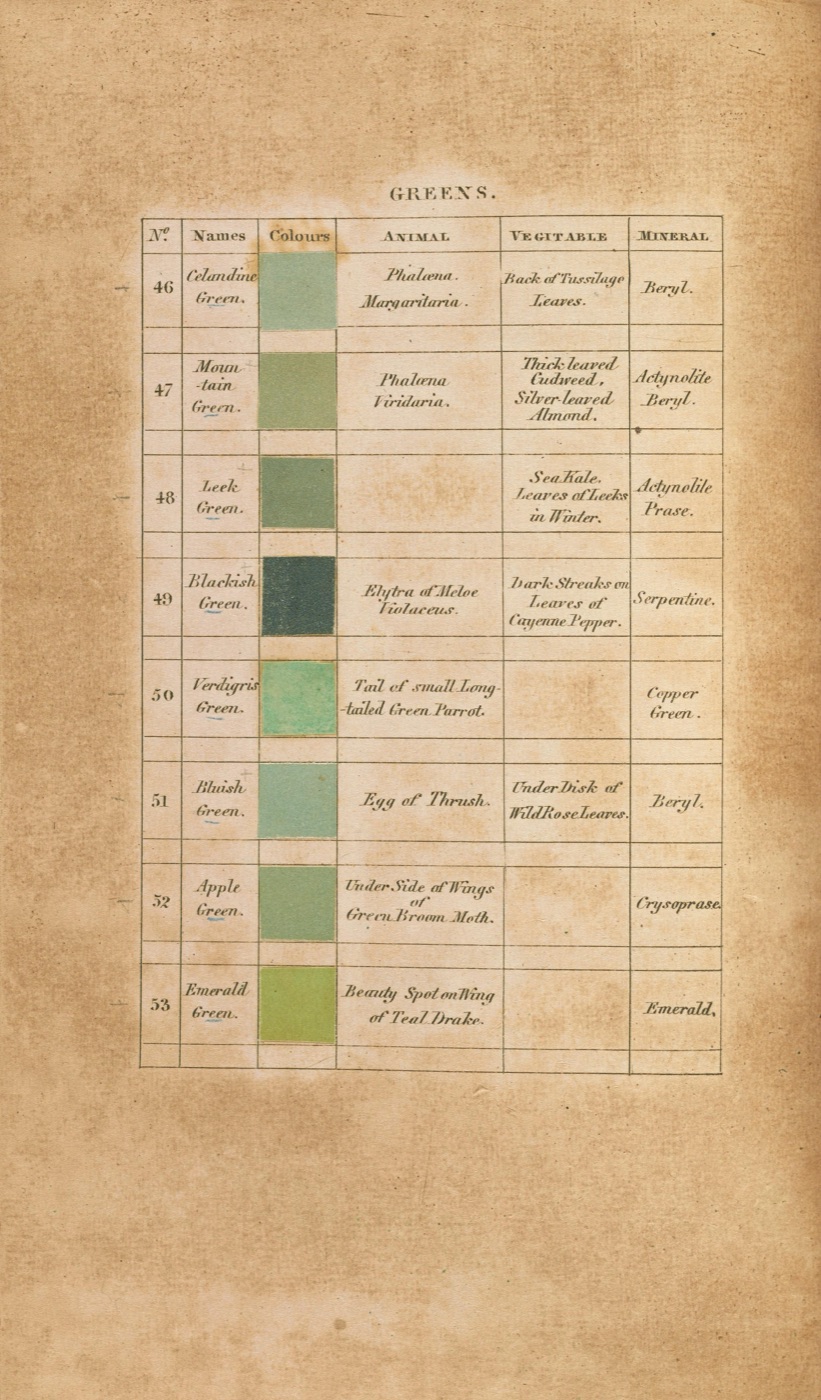
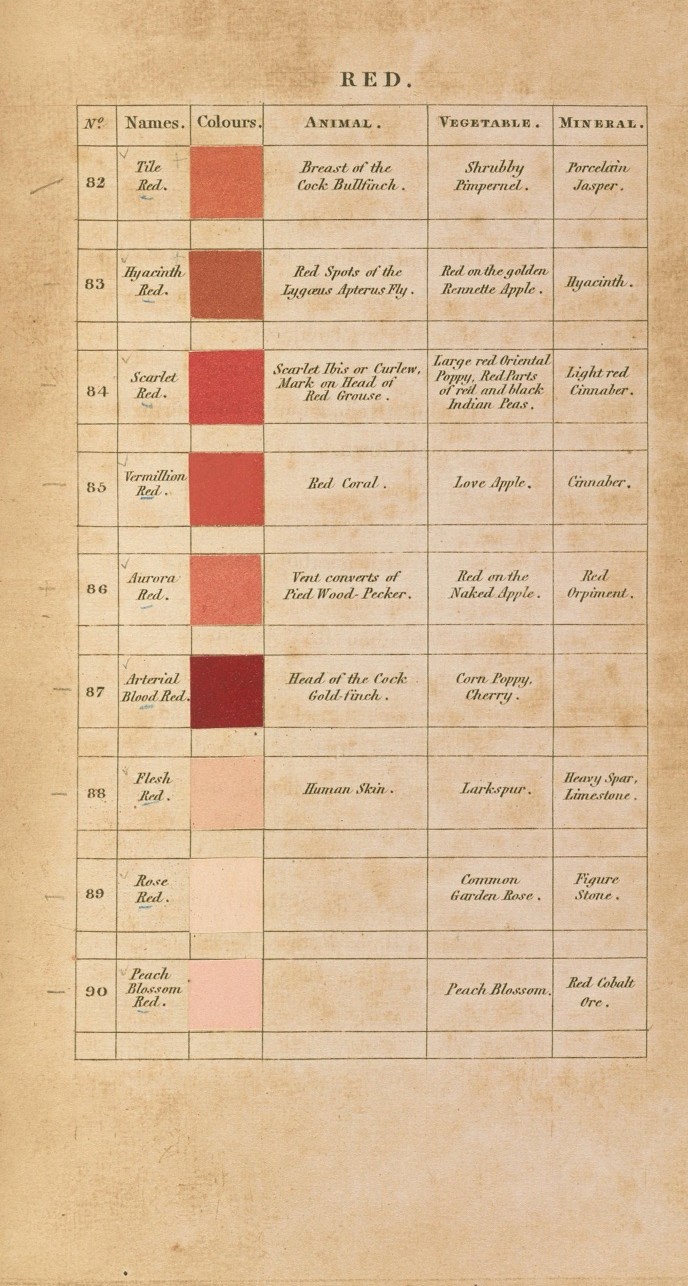
The minerals named in the third column are the touchstones of the system. Greyish white is granular limestone; yellowish white is chalk and tripoli; skimmed-milk white is common opal. The darker blues are blue copper ore (azurite); ultramarine blue is “azure stone or lapis lazuli”; Berlin blue is blue sapphire; greenish blue is fluor spar. Apple green is chrysoprase, grass green is uran mica, pistachio green is chrysolite. Scarlet red is light red cinnabar and vermilion red is cinnabar; aurora red is red orpiment; flesh red is heavy spar (barite); peach-blossom red is red cobalt ore (erythrite).
No zinc mineral appears among Werner’s examples: the Franklin minerals were only beginning to be described when Syme published.
Sources and further reading
- Abraham Gottlob Werner. Wikipedia
- Syme, P., 1821, Werner’s nomenclature of colours, with additions, arranged so as to render it highly useful to the arts and sciences. 2nd ed. Edinburgh: William Blackwood. Full scan (Internet Archive)
Written with Claude, an AI model made by Anthropic, from the sources listed above, and checked against them. October 2026.