How the photographic industry learned to record colored objects truthfully, with filters, plates and measured light.
The photography of colored objects
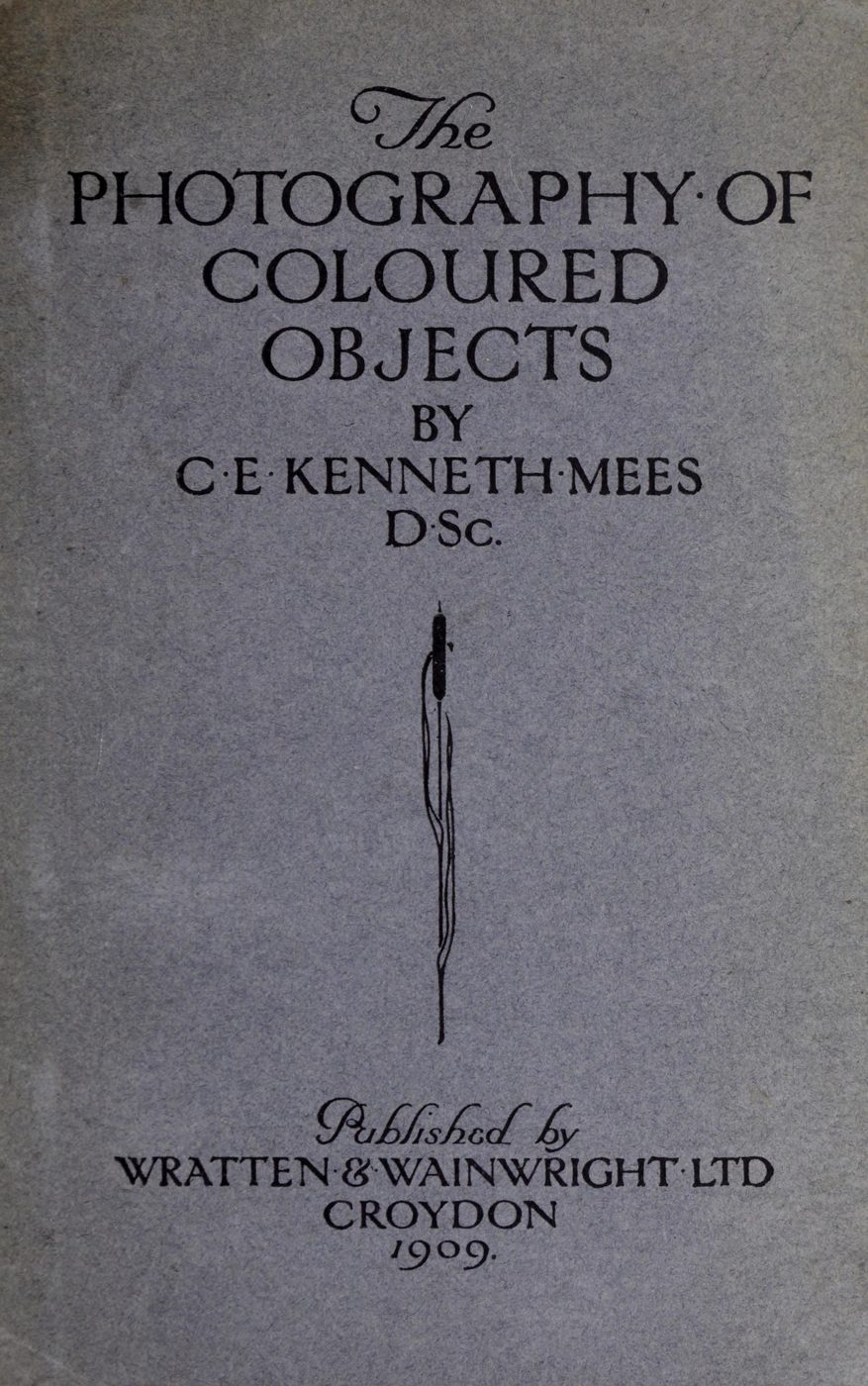
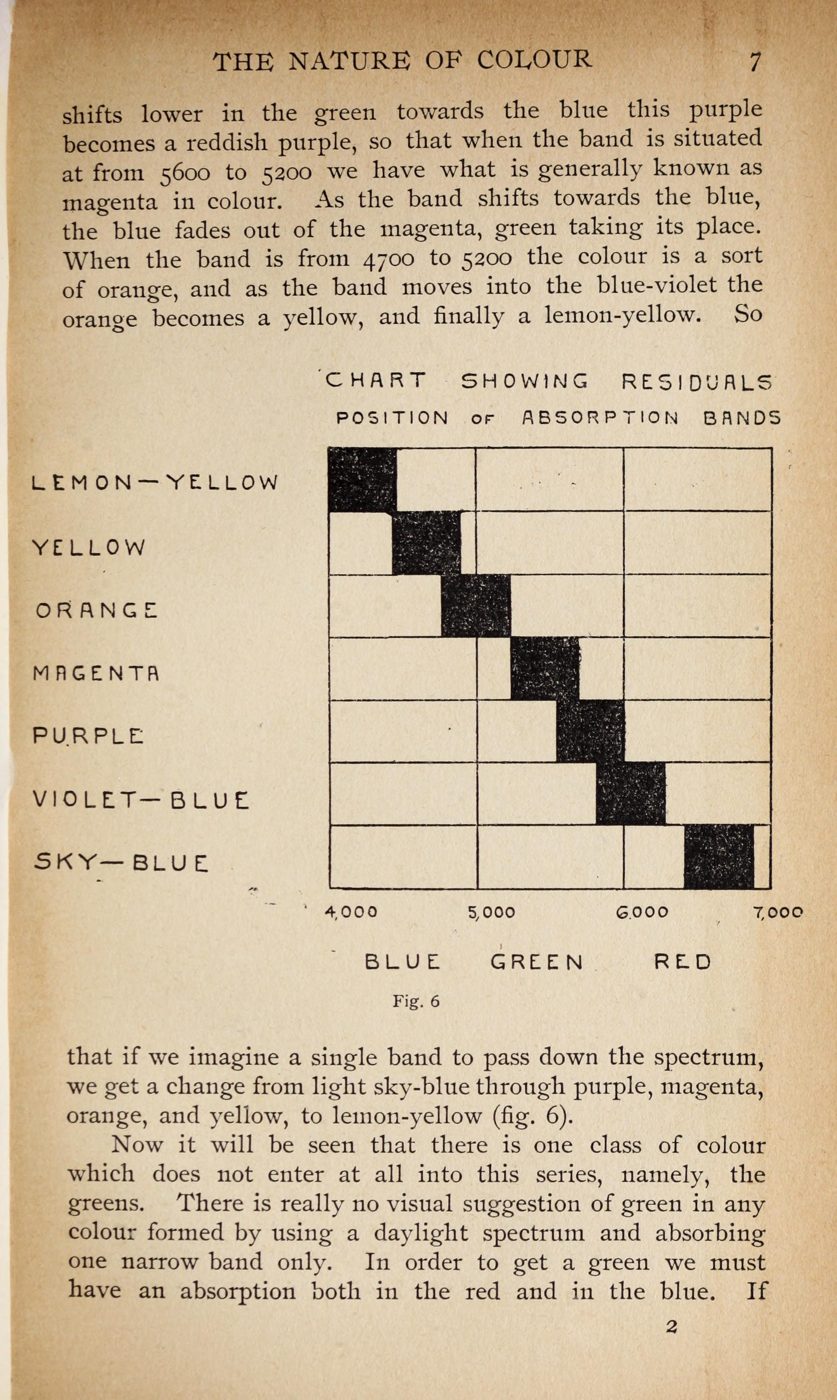
Early photographic plates saw color very differently from the eye: blue came out pale and red came out black. In 1909 C. E. Kenneth Mees and his colleagues at Wratten & Wainwright, a British plate maker, published The Photography of Coloured Objects, explaining how sensitized plates and colored filters could render a colored subject in its proper tones.
Mees joined Eastman Kodak in Rochester in 1912 to found its research laboratory, and Kodak continued the work: an American Photography of Colored Objects (1919) and successive editions of Wratten Light Filters, catalogs of filters with their measured transmission, such as the ninth edition of 1928. Mees’s Atlas of Absorption Spectra (1909) charted how dyes absorb light across the spectrum.
These books matter for minerals because every specimen photograph is shaped by them. A photograph of a Franklin specimen in daylight, or glowing under ultraviolet light, is a record made through a lens, a filter and a sensitive surface, each of which changes the color.
Sources and further reading
- Eastman Kodak Company, 1919, The photography of colored objects. Rochester. Internet Archive
- Eastman Kodak Company, 1928, Wratten light filters, 9th ed. Internet Archive
- Mees, C. E. K., 1909, An atlas of absorption spectra. Internet Archive
- Mees, C. E. K., and others, 1909, The photography of coloured objects. Croydon: Wratten & Wainwright. Internet Archive
Written with Claude, an AI model made by Anthropic, from the sources listed above, and checked against them. October 2026.