A painter’s system that describes every color by three numbers, hue, value and chroma, and became a world standard.
Hue, value and chroma
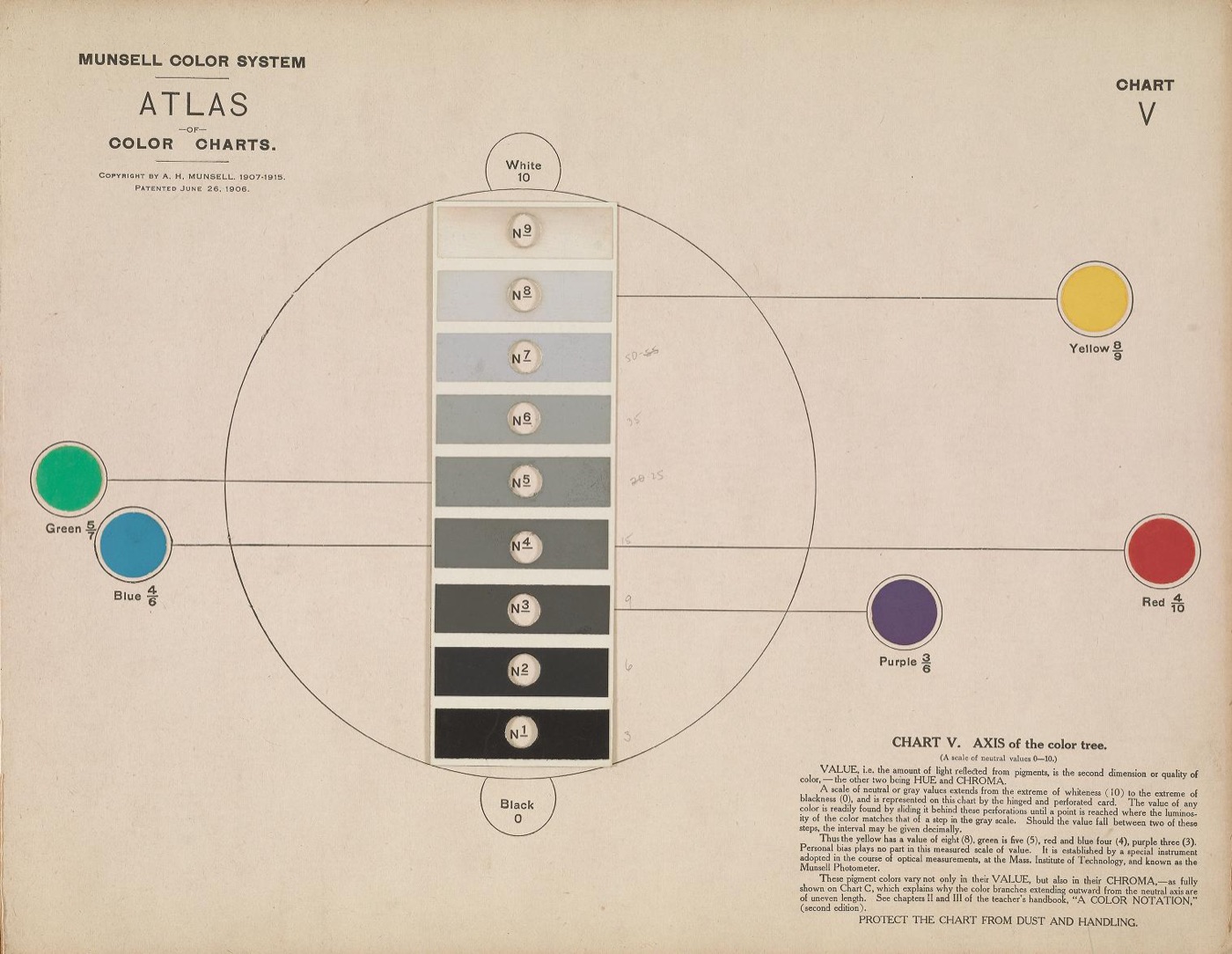
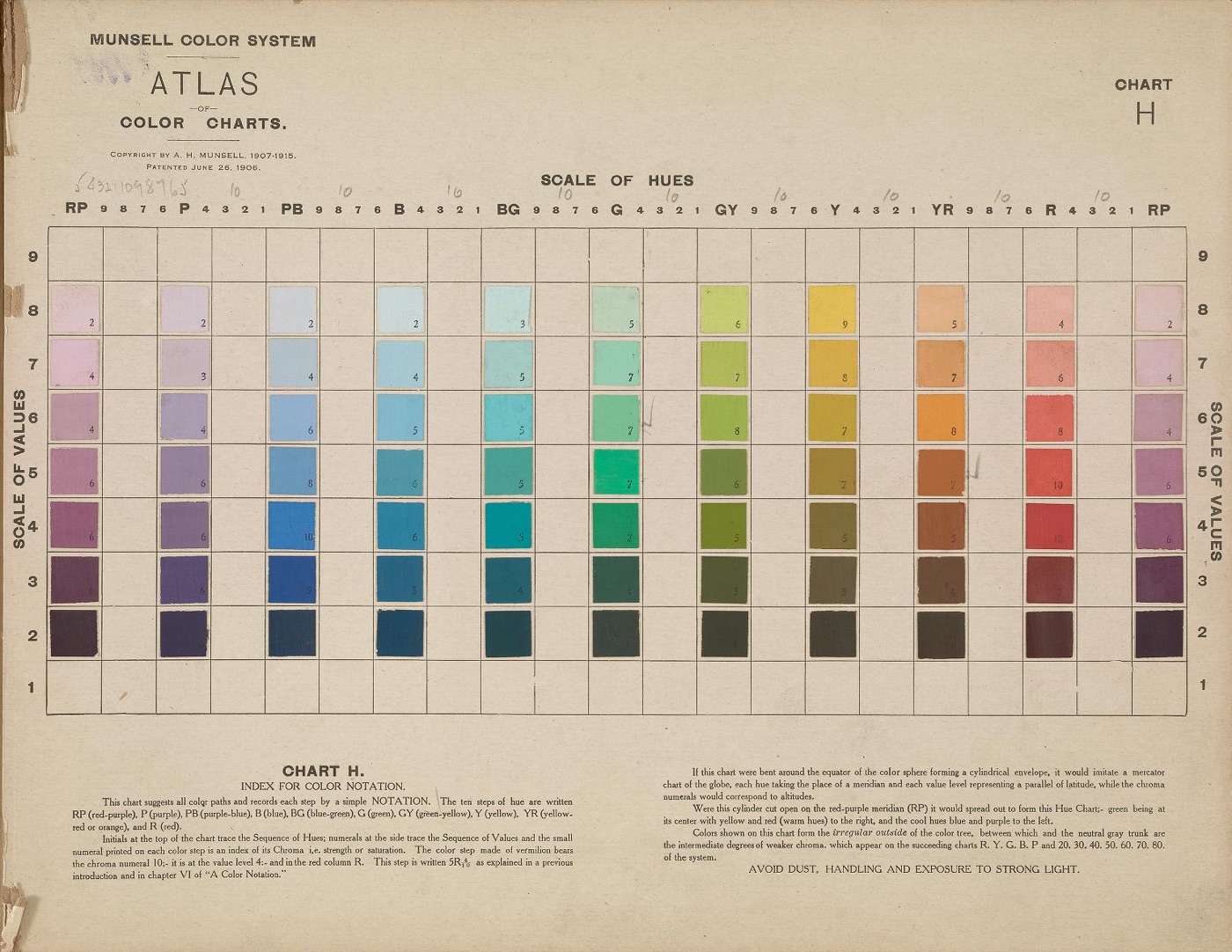
Albert H. Munsell (1858–1918), a Boston painter and teacher, set out to replace color names with measurement. In A Color Notation (1905) he described each color by three qualities: hue (red, yellow, green and so on), value (how light or dark) and chroma (how strong or weak), written as a short code such as 5R 4/14.
In 1915 he published the Atlas of the Munsell Color System, a set of painted charts arranging colors in equal visual steps. The system was refined after his death and remains in use in science and industry.
The color tree
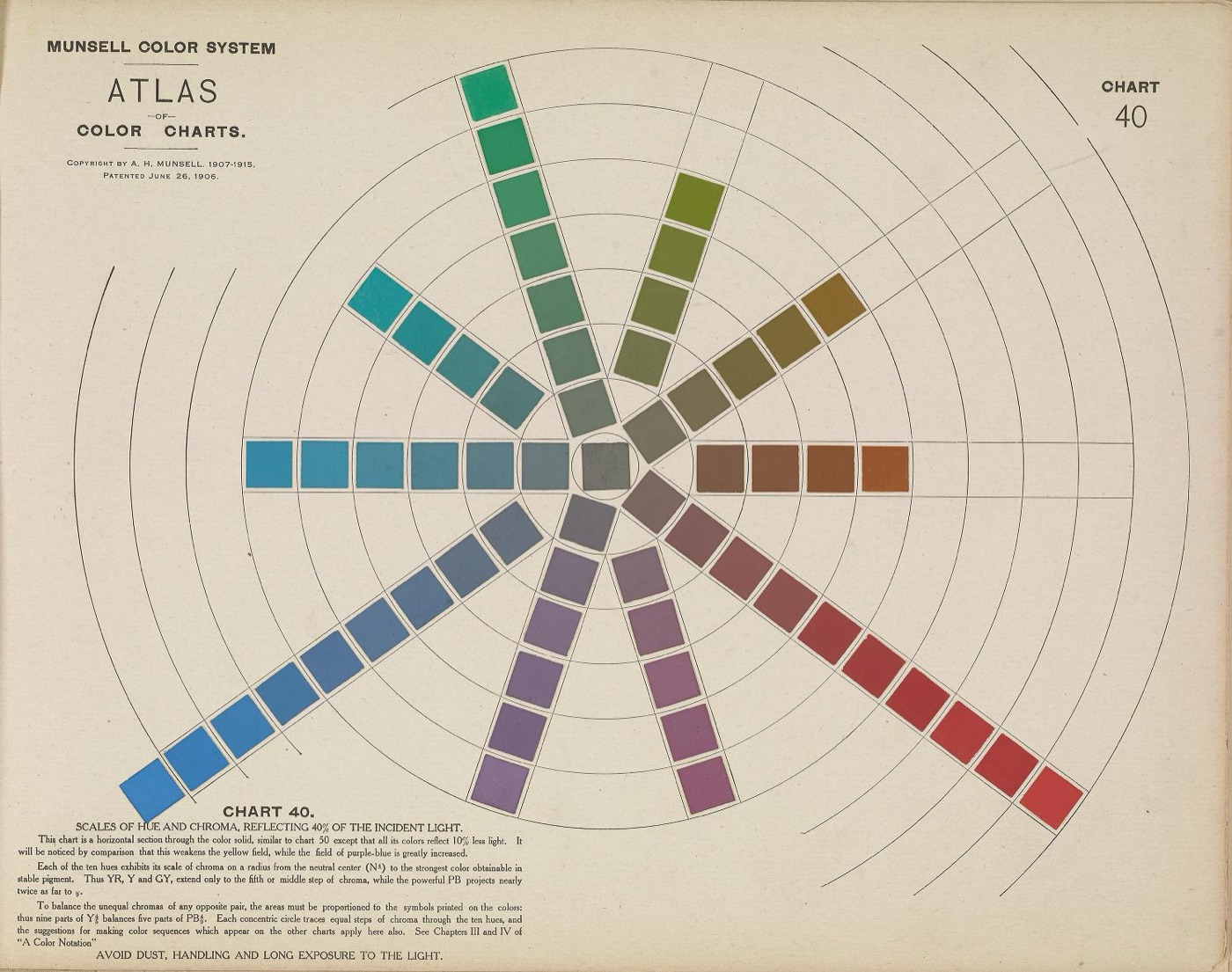
Munsell pictured the whole range of colors as a solid: a vertical axis of grays from black to white, hues arranged around it, and chroma increasing outward. Because his steps were based on how colors look rather than on how pigments mix, the solid is irregular, larger where strong colors are possible.
Sources and further reading
- Munsell, A. H., 1907 (copyright 1905), A color notation. Boston: G. H. Ellis. Project Gutenberg
- Munsell, A. H., 1915, Atlas of the Munsell color system. Malden, Mass. Full scan (Internet Archive)
Written with Claude, an AI model made by Anthropic, from the sources listed above, and checked against them. October 2026.